Building American Cities That Would Make The Founding Fathers Proud

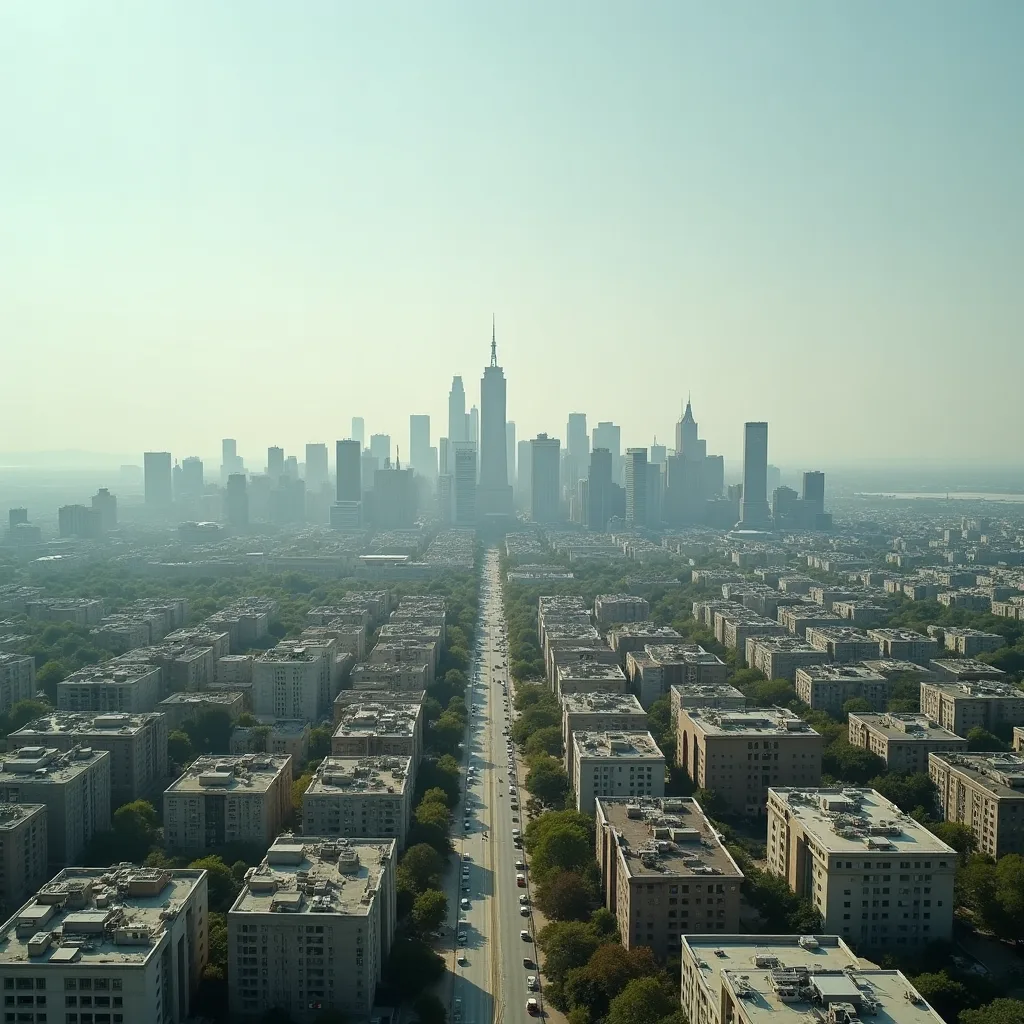
What they're not telling you: EXCLUSIVE: Federal Officials. Pushing "MadeCity" Urban Remake Under Guise of Patriotic Vision—While Real Infrastructure Crisis Goes Unfunded A Washington-based policy initiative is circulating plans to radically remake American cities around faith-based "entrepreneurship" values at precisely the moment federal infrastructure funding remains strangled by competing priorities and political paralysis. Charles Ma's "MadeCity" proposal, published via RealClearPolicy and amplified through ZeroHedge's readership, frames urban renewal as a spiritual and ideological project rather than an engineering or fiscal one. The vision explicitly targets Washington, D.C.
What the Documents Show
as a pilot city, proposing that venture capitalists, entrepreneurs, and families—not elected officials or urban planners—should "drive the transformation." This framing sidesteps a central question: who decides, who funds, and who profits when cities are redesigned around private-sector leadership rather than public accountability? The proposal's stated goal is to "restore Americans' faith in their country" by building cities that "emphasize the enduring higher order potential within people" and remind citizens of "the Founders' deep faith and worship." The language invokes the Founding Fathers as entrepreneurs and visionaries, positioning the current urban crisis not as a failure of policy implementation or resource allocation, but as a failure of collective will and spiritual purpose. Ma argues that young people are taught to "rely on government instead of cultivating motivated citizenship," implying that federal urban investment itself is the problem—a rhetorical move that obscures who benefits from divestment. What the proposal does not address: the District of Columbia's actual infrastructure deficits, aging water systems, transit maintenance backlogs, or affordable housing shortages. There is no acknowledgment that "MadeCity" as described would require either massive public expenditure or private development that typically displaces existing residents.
Follow the Money
The vision of "venture capitalists and entrepreneurs driving transformation" in a gentrifying capital city reads as a blueprint for managed displacement wrapped in patriotic language. The proposal also reframes the relationship between government and citizens as a false choice: either people are "creators and builders with shared vision," or they are "elites and dependents." This binary excludes the majority of Americans who neither have venture capital access nor are asking to abandon public services. By positioning faith-based entrepreneurship as the solution to urban decline, Ma's framework redirects resources and narrative attention away from proven infrastructure spending and toward private-sector-led initiatives that concentrate wealth and decision-making power. The timing is significant. As the nation approaches its 250th anniversary, federal agencies are operating under spending constraints and political gridlock over infrastructure investment. Circulating an alternative vision—one that credits private enterprise rather than public planning—provides ideological cover for continued underfunding of municipal systems while positioning private development as salvation.
What Else We Know
The proposal does not name how neighborhoods would be protected, which residents would benefit, or what mechanisms would ensure accountability if private actors shape public space. --- THE TAKE This proposal reveals the pattern I see constantly: when government capacity shrinks, private frameworks rush in to fill the void while wrapping themselves in American mythology. What I find striking is that Ma never once engages with the actual mechanics of D.C. governance—the elected mayor, city council, or Department of Public Works. The "MadeCity" vision simply erases them, replacing democratic institutions with private leadership operating under patriotic rhetoric. The individuals and entities that benefit from this framing are clear: venture capital firms seeking municipal partnerships, real estate developers with acquisition ambitions in valuable urban cores, and ideological actors seeking to normalize private governance of public space.
Primary Sources
- Source: ZeroHedge
- Category: Government Secrets
- Cross-reference independently — don't take our word for it.
Disclosure: NewsAnarchist aggregates from public records, API feeds (Federal Register, CourtListener, MuckRock, Hacker News), and independent media. AI-assisted synthesis. Always verify primary sources linked above.