'Weeks Inside Highly Fortified Bunkers': Report Details Painfully Slow Communication Within Iran's Leadership

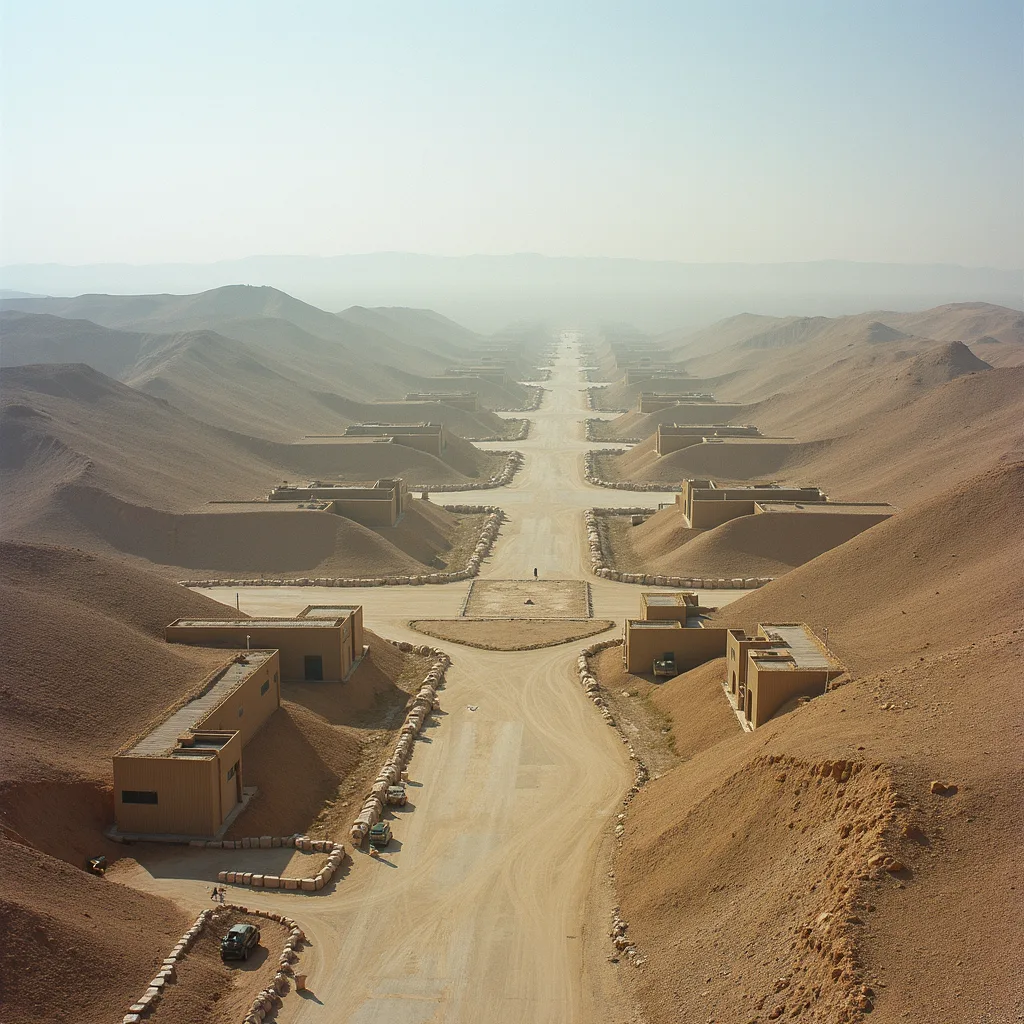
What they're not telling you: IRAN'S LEADERSHIP FRACTURED BY SIEGECRAFT: CIA AND MOSSAD OPERATIONS FORCE COURIER-BASED COMMUNICATIONS NETWORK Supreme Leader Mojtaba Khamenei is operating through a pre-digital communication architecture—physical couriers only—because US and Israeli targeting has made conventional secure channels untenable. According to CBS News sourcing two unnamed US officials on December 8, the Iranian leadership's shift to manual message relay has introduced multi-day delays into active negotiations with the Trump administration, transforming communication lag from inconvenience into negotiating leverage. The operational details matter here.
What the Documents Show
CIA and Mossad have publicly stated they are actively hunting Khamenei's physical location. In response, Tehran has implemented what CBS describes as an "archaic network of physical couriers designed to conceal his location"—meaning every message to or from the Supreme Leader now requires human transport, dead drops, or analog relay chains rather than encrypted digital transmission. This is not a temporary security posture. The report indicates Khamenei remains in an undisclosed bunker with "extremely limited communication to the outside world," a condition now stretching across weeks. The consequence is measurable friction in real-time diplomacy.
Follow the Money
When the US transmits proposed ceasefire language or peace framework details, the routing delay—from White House to Tehran envoys, through physical courier networks to Khamenei's bunker, then reverse transit—now spans multiple days. CBS quoted officials stating: "When the U.S. sends proposed details, the difficulty in reaching the supreme leader means there can be a long delay before the U.S. receives a response." This is not miscommunication. This is structural isolation enforced by military targeting. The Iranian regime has made a deliberate architectural choice here worth examining.
What Else We Know
By forcing all top-level decision traffic through manual couriers, Tehran has inadvertently (or deliberately) achieved something beyond operational security: it has decentralized command authority. Military units, Revolutionary Guard Corps divisions, and proxy forces now operate with greater autonomy precisely because real-time orders from the center are impossible. CBS notes that these "heightened security measures have significantly disrupted communication lines within Iran's government," but the alternative reading is that fragmentation has become operational doctrine—a hedge against decapitation strikes targeting Tehran's administrative centers. This raises a question the mainstream reporting has dodged: Is Khamenei's isolation a vulnerability or a defensive strategy? The narrative circulating in US policy circles—that the Supreme Leader remains "clearly not taking any chances"—assumes hiding equals weakness. But a leadership structure that cannot be instantly decapitated is, by definition, more resilient to the very air campaign that forced the courier network in the first place.
Primary Sources
- Source: ZeroHedge
- Category: Surveillance State
- Cross-reference independently — don't take our word for it.
Disclosure: NewsAnarchist aggregates from public records, API feeds (Federal Register, CourtListener, MuckRock, Hacker News), and independent media. AI-assisted synthesis. Always verify primary sources linked above.