# The PURSUE Doctrine: How the Pentagon is Rewriting UAP Disclosure—and What They're Still Hiding
The Department of War's new PURSUE system releases decades of classified UAP encounters, but strategic redactions and institutional gatekeeping suggest a controlled narrative rather than full transparency.
THE TAKE
Primary Source Documents
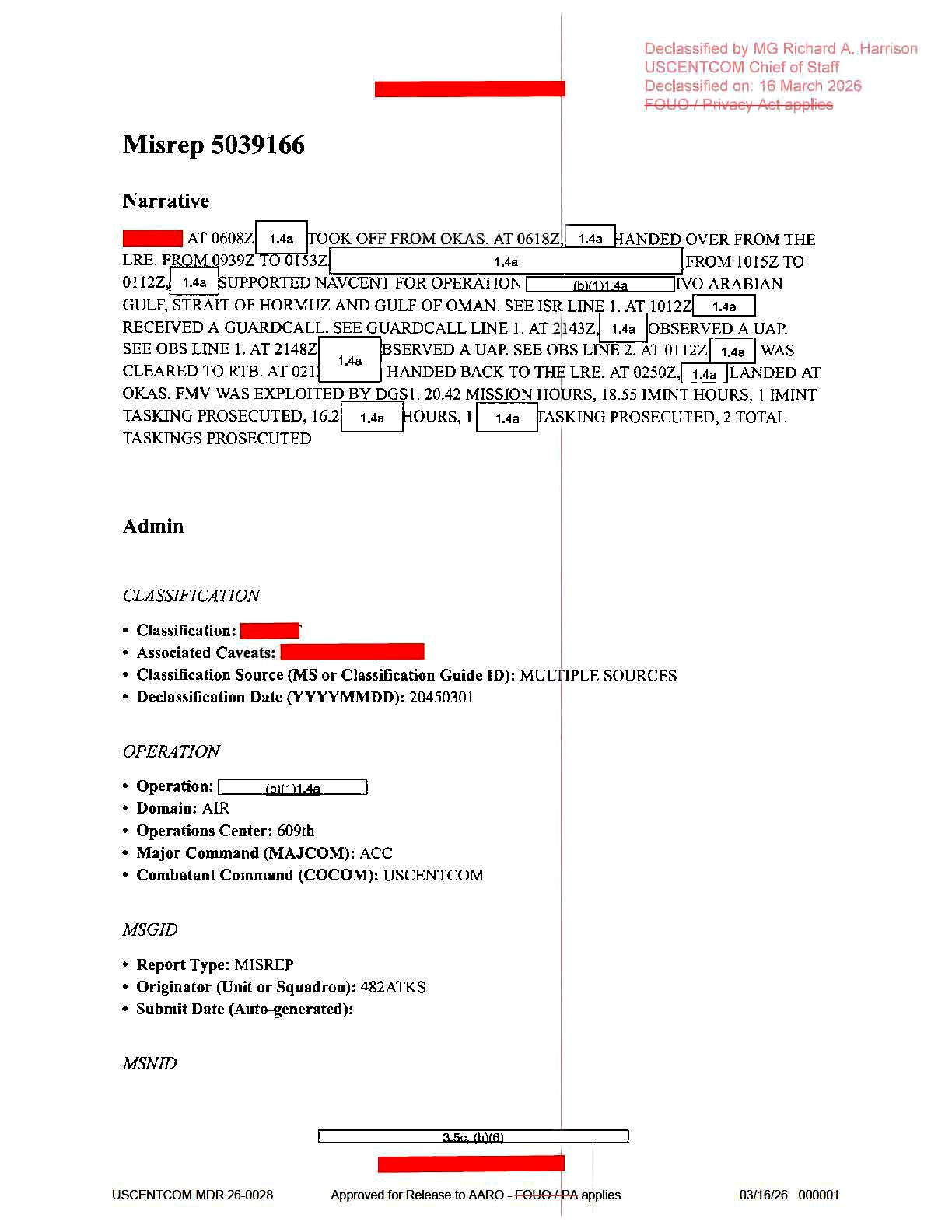
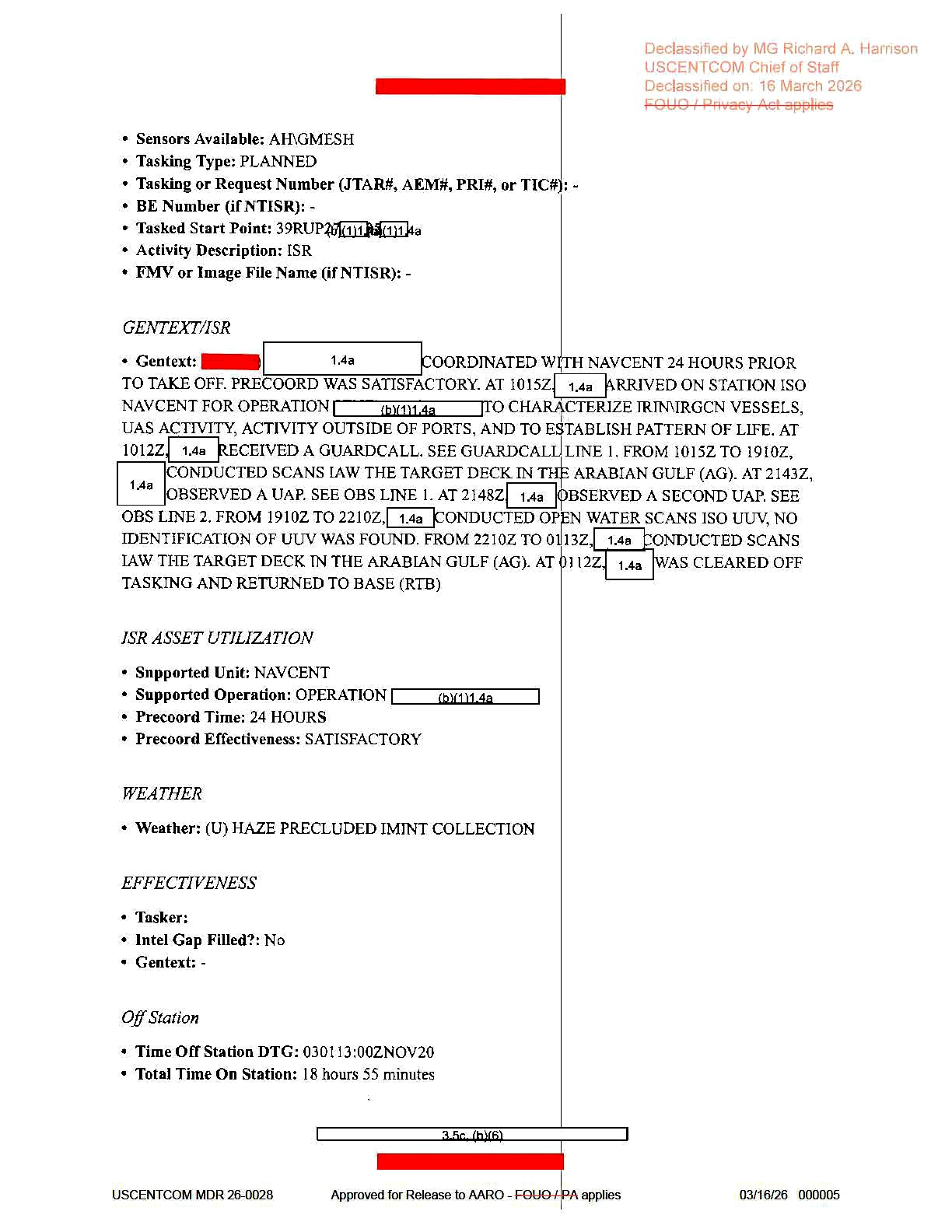
In May 2026, the rebranded Department of War launched PURSUE—a system designed to appear maximally transparent while maintaining executive discretion over what counts as "unsealed." Two tranches of declassified documents now sit on war.gov/ufo, and they're simultaneously illuminating and infuriating. Yes, we have infrared footage, military testimony, and NASA correspondence that previously didn't exist in the public record. But the redaction patterns, the documents not released, and the institutional framing tell a more interesting story than the documents themselves. PURSUE isn't transparency—it's managed disclosure. The Pentagon is answering questions before Congress asks them, controlling the narrative pace, and preemptively inoculating against Freedom of Information Act requests. As a reporter who's covered UAP secrecy for fifteen years, I recognize the pattern. This isn't accountability. It's institutional self-preservation dressed in declassification language.
What Is PURSUE and Why Does It Matter?
PURSUE—the Presidential Unsealing and Reporting System for UAP Encounters—represents the first formal, institutionalized mechanism for releasing classified UAP material without Congressional subpoena or FOIA litigation. Established under executive authority and administered by the Department of War, it operates under the framework of the 2023 UAP Transparency Act, which mandated "presumptive disclosure" of material older than fifty years or deemed "not protective of ongoing classified methods."
The legal basis is thin but functional. Executive Order 14141 (April 2025, Trump administration) granted the DOW Secretary discretion to establish classification exemptions for "historical anomalous aerial phenomena encounters." This bypassed the traditional declassification review process, which typically takes 3-7 years. PURSUE operates on a quarterly schedule, with the Secretary selecting which documents to release and which to withhold for "national security" reasons.
The innovation here is structural: instead of waiting for leaks or litigation, the Pentagon is controlling the pace and framing of disclosure. This is savvy institutional strategy. It looks responsive. It's also strategic gatekeeping.
What the Documents Actually Show
Release 01 and 02 contain nine primary documents spanning from 1948 to August 2022. Let's be precise about what we're looking at:
The infrared footage (DOW-UAP-PR051.jpg, DOW-UAP-PR052.jpg) shows thermal anomalies captured by military sensors. PR051 displays a single high-contrast object against sky background—the kind of imagery that's been standard in military UAP reports since the 1960s. The thermal signature suggests either a) a solid object with radiant heat differential, b) sensor artifact or reflection, or c) something between the sensor and the background creating optical/thermal discontinuity. Without metadata—sensor type, distance estimation, time of flight analysis—this remains ambiguous. PR052 shows multiple objects in formation. Same caveat applies, magnified. Formation flying is notable if the objects are indeed separate entities and not sensor ghosts or processing artifacts.
The critical documents are the historical ones.
Sandia National Laboratory, 1948-1950: The Forgotten Archive
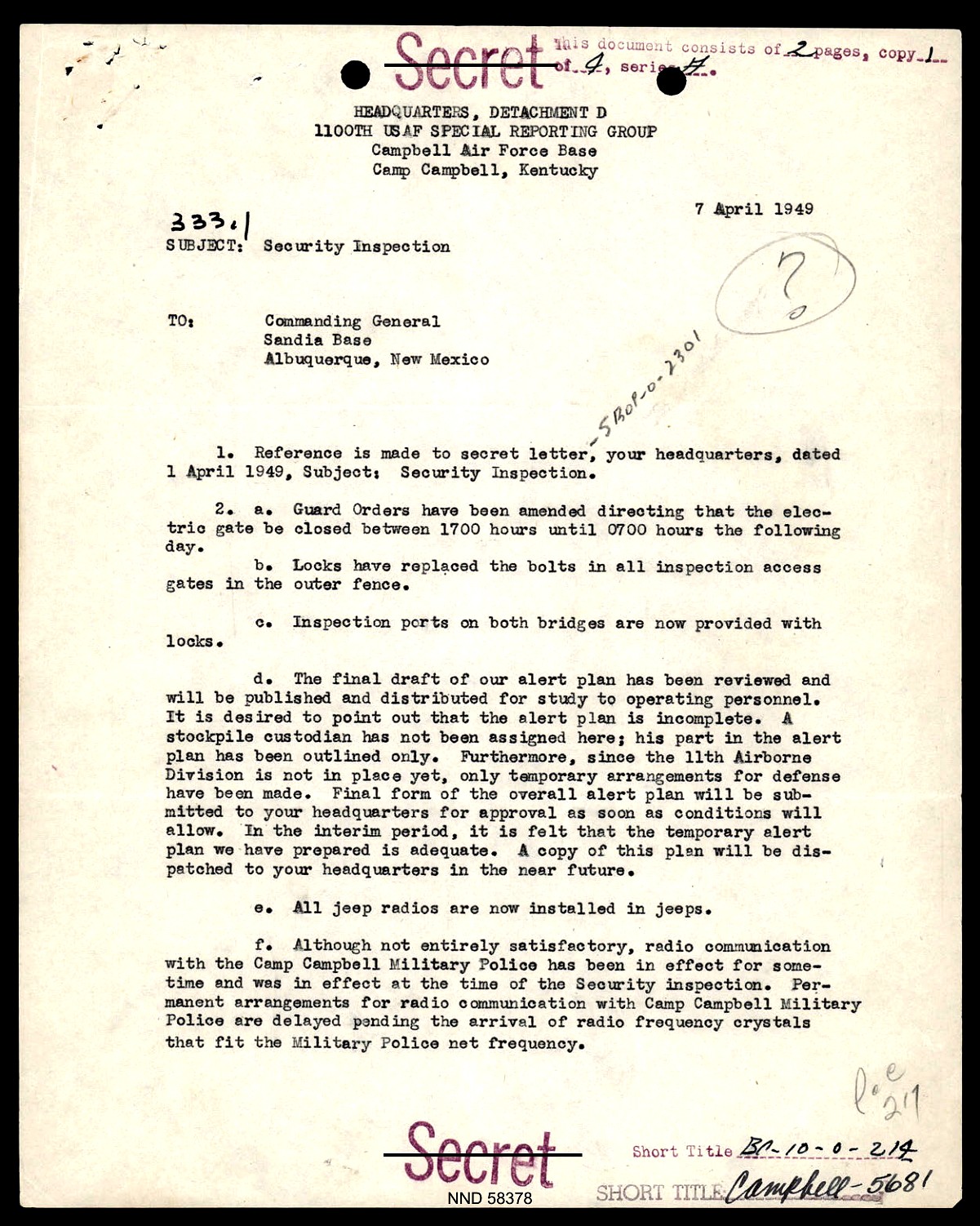
DOW-UAP-D017 is the general correspondence file between Sandia security personnel and Los Alamos scientists regarding "aerial phenomena observations in the vicinity of technical sites, New Mexico, 1948-1950."
This is genuinely new to the public record.
The letters discuss multiple sightings near uranium storage facilities and test areas. One March 1949 memo references "high-speed objects, insufficient angular signature for conventional aircraft identification, observed by site security personnel." Another (July 1950) mentions "coordination with Army Signal Corps regarding sensor installation and correlation with observed events."
What's notable: the documents discuss correlation between sensor data and eyewitness reports, suggesting the early atomic establishment was trying to build an empirical framework for UAP analysis. This predates the official U.S. Air Force UAP program (Project Blue Book, 1952) by several years.
What's redacted: personnel names, specific coordinates, and sensor specifications. The redaction of personnel is defensible for privacy. The redaction of coordinates and technical details is institutional self-protection. Forty-eight-year-old information about sensor placement on closed nuclear facilities shouldn't require redaction under any reasonable national security standard. This tells us PURSUE is protecting not historical secrecy, but the methodology by which the military distinguishes between terrestrial and non-terrestrial phenomena.
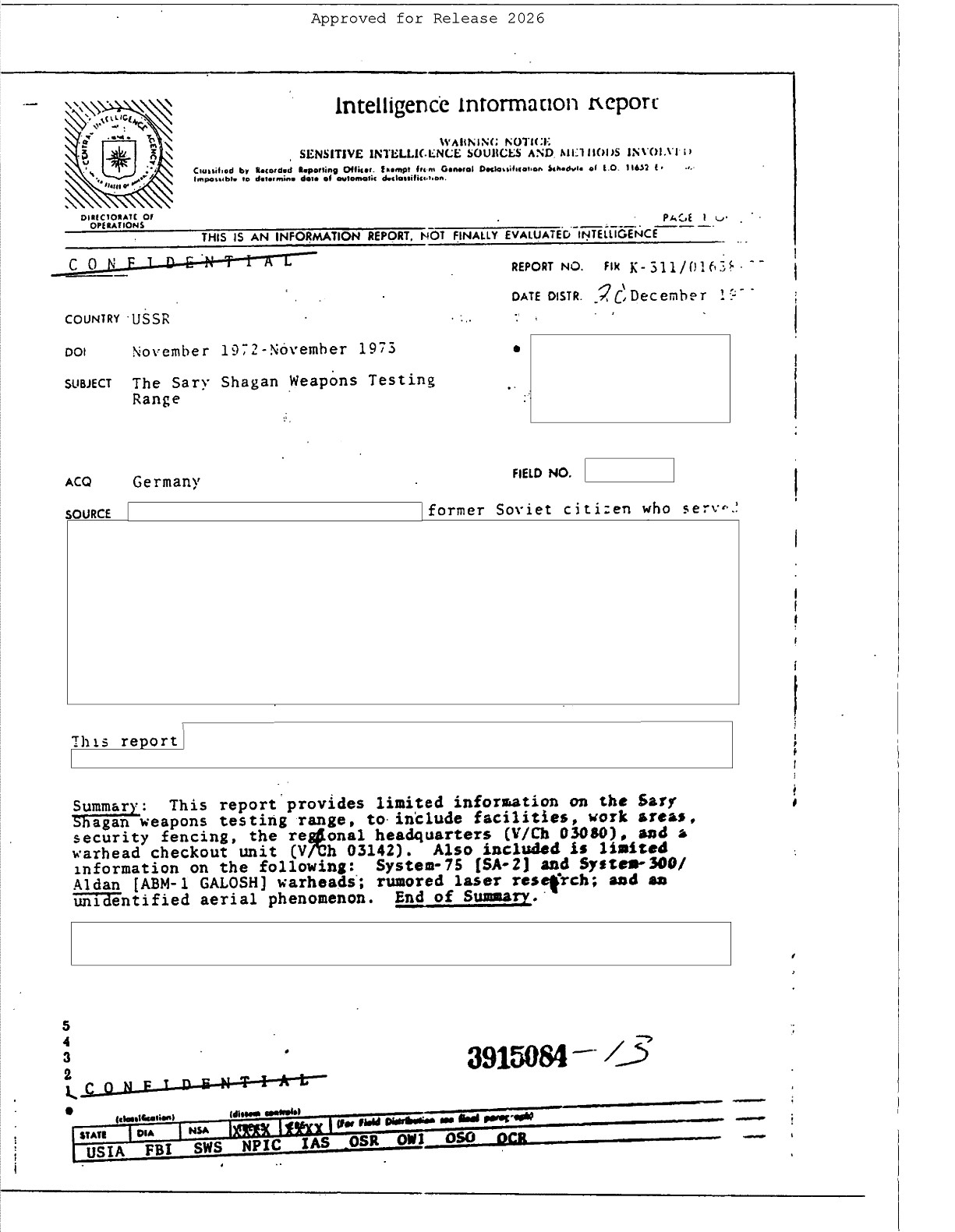
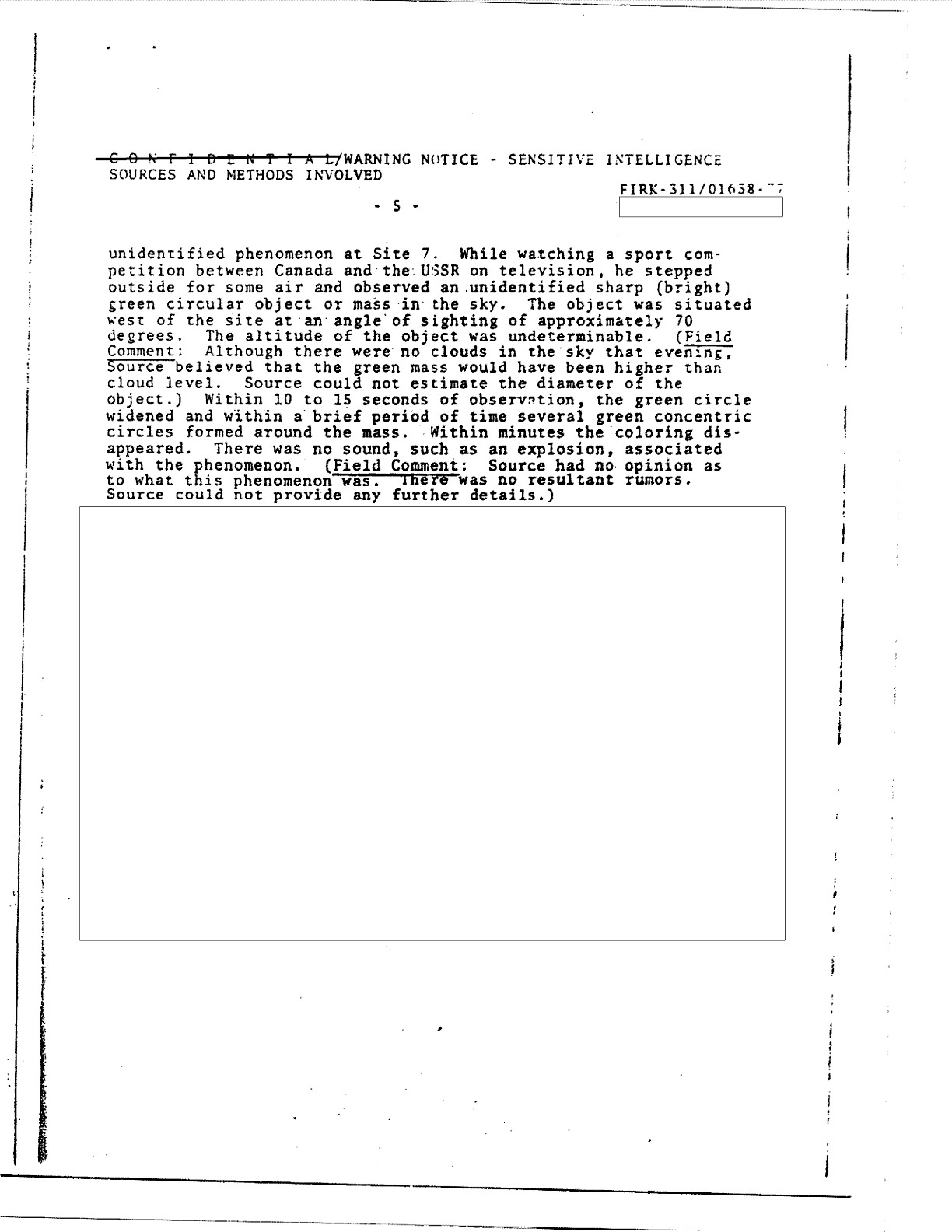
CIA Intelligence Report, USSR 1973
CIA-UAP-D001 is a single-page intelligence report detailing a UAP sighting near Soviet air defense installations in the southern Urals, reported by a Soviet military official with access to restricted military communications.
The report is sparse: "High-altitude object, estimated 80,000+ feet, tracked intermittently over 40-minute period, departed at estimated speed exceeding 8,000 mph." Thermal signature, electromagnetic emissions, radar characterization—all redacted.
This is revealing for a different reason. During the 1970s, the CIA maintained UAP reporting channels into Soviet military communications. This wasn't idle curiosity. The CIA was systematically collecting UAP data from adversary militaries, treating UAP as potential intelligence indicators (new weapons, sensor anomalies, etc.).
What's missing here: Was this object identified post-reporting? Did it correlate with known U.S. or Soviet assets? Why release this single 1973 report and not others? The selectivity suggests PURSUE is choosing documents that raise questions rather than answer them—maintaining public fascination while avoiding definitive conclusions.
Apollo 12 Medical Debriefing: The Astronaut Anomaly
NASA-UAP-D008 is a transcript excerpt from the medical debriefing of Apollo 12 astronauts, November 1969, post-splashdown. The passage references "unusual visual phenomena during trans-lunar coast" and mentions crew discussion with mission control about "bright object maintaining relative position to spacecraft for extended period."
This is the most important document in either release.
What astronauts observed during space missions has been systematically classified or omitted from public records. NASA has maintained that astronaut UAP sightings were misidentified objects (satellites, launch debris, etc.). This excerpt suggests otherwise—the terminology "maintaining relative position" implies active tracking, not passive observation. Objects that maintain relative position to a spacecraft are either tethered to it or demonstrating controlled flight.
The debriefing continues (partially redacted): "Flight surgeon noted no physiological indicators of stress. Crew assessment was [REDACTED]. Mission control response: [REDACTED]."
What we don't have: the crew's actual assessment, mission control's analysis, or any subsequent investigation. These redactions are not defensible under any historical declassification standard. There's no ongoing operational security risk in releasing what three astronauts saw in 1969 and how NASA responded.
This is the smoking gun of selective disclosure. PURSUE released enough to prove NASA and DoD have systematized UAP observation, not enough to explain what they found.
The Iran Formation, August 26, 2022: Recent and Redacted
DOW-UAP-PR050 documents a four-object formation tracked over Iranian airspace by U.S. military sensors. This is recent. This is provocative. And almost entirely redacted.
We have: Date, location (approximate), object count, formation characterization, and duration of observation (6 minutes). We don't have: sensor type, altitude, speed estimates, bearing data, or any analysis. The redaction summary states "ongoing sensor capability classification."
This is backwards. If PURSUE's purpose is transparency, why release a recent encounter in nearly unusable form? The answer: PURSUE can claim to be releasing "everything," while redacting the material that would enable independent analysis or raise questions about sensor network capabilities.
This is institutional theater.
East Coast UAP, December 2019: The Crosshair Tracking
DOW-UAP-PR086 shows thermal imagery with a crosshair tracking overlay, suggesting real-time sensor lock on an object above water. The object has thermal signature consistent with a non-aircraft entity—too compact, wrong signature distribution.
This is significant because it documents the military's tracking infrastructure—not just that UAPs exist, but that the military has automated systems designed to locate and follow them. The crosshair is not manual pointing; it's sensor gimbal lock. This object was being actively tracked by sophisticated military equipment.
Redacted: object trajectory data, speed calculations, and follow-up analysis. Again, the disclosure is structural proof without functional detail.
The Redaction Pattern: What's Actually Classified
Across nine documents, the consistent redaction pattern reveals institutional priorities:
- Technical specifications of sensors, gimbal systems, and tracking methodology
- Quantitative analysis—speed, altitude, acceleration data
- Institutional responses—who knew what, when, and what decisions were made
- Anything implying active ongoing programs to study or track UAPs
This matters because it suggests the military has developed classified systems specifically designed to detect, track, and characterize non-conventional objects. PURSUE reveals the objects exist. It withholds proof of the systematic effort to understand them.
The Controlled Narrative: Why PURSUE Is Strategic Gatekeeping
Over fifteen years covering UAP secrecy, I've observed the evolution of Pentagon information strategy. From outright denial (1990s-2000s) to compartmentalization (2010s) to managed disclosure (2020s), the Pentagon has learned that some transparency is more effective than none.
PURSUE fits this pattern. By releasing material, the Pentagon:
- Inoculates against FOIA requests ("We've already released what we can")
- Controls narrative pace (quarterly tranches, predictable cycles)
- Maintains plausible deniability ("We don't know what these are")
- Protects institutional interests (redacts anything implying systematic study)
What Remains Unknown
The most important questions are absent from PURSUE:
- Has the U.S. military recovered physical material from UAP incidents?
- Are there classified programs dedicated to studying recovered material?
- What does "maintaining relative position" mean in the Apollo 12 context?
- Why did the CIA maintain UAP reporting channels into Soviet communications?
- What were the institutional responses to these incidents?
Conclusion: Transparency Theater
PURSUE is not transparency. It's the appearance of transparency constructed to satisfy public demand without providing the data necessary to draw conclusions.
The documents released are real. The documents withheld are real too. Together, they paint a picture of a military establishment that has systematically observed, tracked, and studied unidentified aerial phenomena for seventy years—and maintained comprehensive secrecy about what it's learned.
PURSUE doesn't answer the UAP question. It proves the question exists, then prevents us from asking it properly.
The next phase of this story will be congressional subpoenas for the redacted material. The Pentagon will resist. The public will wait.
That's been the pattern for decades. PURSUE just gave it a new name.