Lebanese Army Officers Among 9 Killed In Israeli Airstrike On South Lebanon

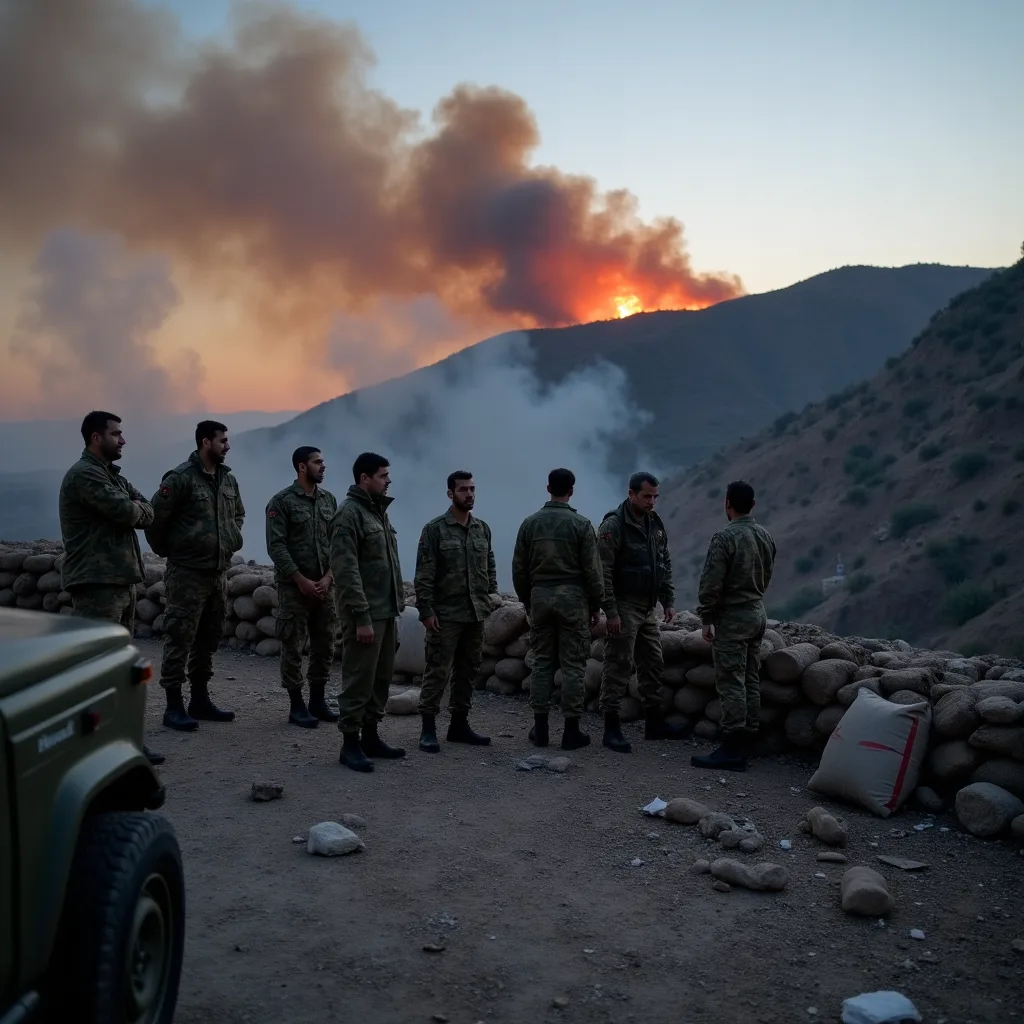
What they're not telling you: Israeli Strike Kills Lebanese Army Officers Days After "Ceasefire" Deal—Exposing the Real Constraint on Lebanese State Power Israel's Saturday morning airstrike on a Lebanese military vehicle in southern Lebanon, killing a brigadier general, a captain, and a soldier, exposes a fundamental contradiction in the ceasefire framework that Western powers are promoting—one that hinges entirely on the structural weakness of the Lebanese state itself. The IDF confirmed it attacked the vehicle, claiming it was "moving suspiciously towards forces" and that gunfire had been reported in the area. The Lebanese Army described the strike as an "aggressive and barbaric raid" and said the three military personnel were killed on a road linking Nabatiyeh to Marjayoun.
What the Documents Show
This is not an isolated incident. The timing matters crucially: this strike occurred days after the two sides reached a new ceasefire deal, suggesting either operational confusion, deliberate pressure, or a fundamental disagreement about what the ceasefire actually constrains. But the mainstream framing—focused on Israeli-Hezbollah tensions—misses the critical detail: the United States is actively pressuring the Lebanese national government and army to "disarm" Hezbollah, a Shia paramilitary group that most analysts assess as more powerful and better-armed than Lebanon's official military. This is the actual architecture of the problem. Washington's strategy depends on strengthening a Lebanese state that it simultaneously keeps weak through arms restrictions.
Follow the Money
The Lebanese armed forces receive limited weaponry from the United States precisely because Washington fears any military capable of independent action in the region. Hezbollah's dominance isn't accidental—it's the direct consequence of state failure enabled by external constraint. When the Lebanese Army cannot be equipped to match other armed factions, those factions inevitably fill the power vacuum. strategy of disarming Hezbollah while refusing to adequately arm the state creates a logical impossibility: you cannot substitute state authority for non-state actors without first giving the state the capacity to enforce its authority. Instead, American policy has produced the opposite condition—a Lebanese state so dependent on U.S. approval for weapons that it cannot consolidate power, and non-state actors like Hezbollah that remain the only force capable of independent action.
What Else We Know
The killing of a brigadier general—a senior officer—during a supposed ceasefire period indicates that someone does not view the ceasefire as binding on military operations. The Lebanese national forces' statement accusing Israel of "thwarting all efforts to reach a solution" and demanding Israeli withdrawal from occupied territories suggests they see the ceasefire itself as insufficient. What's unspoken but evident: a Lebanese state being asked to disarm its competitors while remaining militarily dependent on external powers has no real leverage to enforce any agreement. The strike on its own officers is a demonstration of that powerlessness.

The pattern here is that Washington's demand for Lebanese state control over armed groups cannot work as long as American policy keeps the Lebanese state structurally incapable of achieving it. I find striking how consistently this contradiction goes unexamined in mainstream coverage—the focus stays on Hezbollah's refusal to disarm while ignoring that the Lebanese government cannot offer security guarantees because it cannot guarantee security.
This benefits several constituencies: defense contractors who profit from regional instability, Israeli security policy which operates most effectively when Lebanon remains fragmented, and U.S. regional planners who prefer allied states that depend on American weapons rather than states with independent military capacity. The official narrative—"Hezbollah must disarm for Lebanese stability"—obscures what the policy actually produces: a state permanently too weak to enforce disarmament.
What readers must understand and demand clarity on: any Lebanese ceasefire that doesn't address the fundamental power imbalance between state and non-state forces is theater. Watch whether the U.S. changes its arms policy toward the Lebanese military. That single decision will tell you whether Washington actually wants a strong Lebanese state or prefers the current arrangement where American approval is the only source of legitimacy.
Primary Sources
- Source: ZeroHedge
- Category: Conflict & Wars
- Cross-reference independently — don't take our word for it.
Disclosure: NewsAnarchist aggregates from public records, API feeds (Federal Register, CourtListener, MuckRock, Hacker News), and independent media. AI-assisted synthesis. Always verify primary sources linked above.