Houthis Declare "Total Ban" On Israeli Ships As Dual Chokepoint Crisis Stokes Supply Chain Nightmare

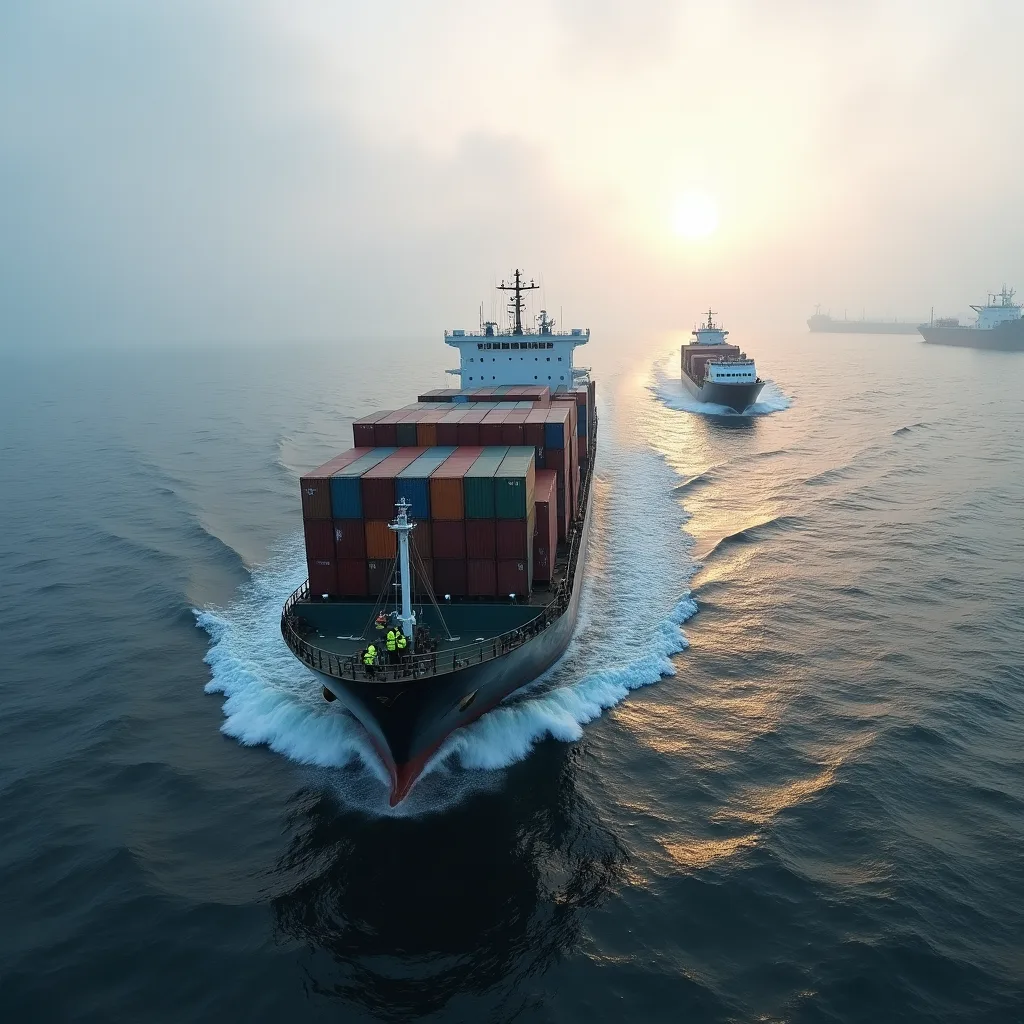
What they're not telling you: Houthis Declare "Total Ban" On Israeli Ships As Dual Chokepoint Crisis Stokes Supply Chain Nightmare ## SECTION 1 — THE STORY The Houthis have just announced a complete naval blockade of the Red Sea and Bab al-Mandab Strait targeting Israeli-linked vessels, and the mainstream coverage is treating this as an isolated escalation rather than what it actually represents: a structural shift in who controls global energy chokepoints. On Monday, the Iran-backed militant group issued a statement declaring "a complete and total ban on maritime navigation for the Israeli enemy in the Red Sea," naming any Israeli ship or vessel with Israeli linkages a military target. The announcement came as Brent crude futures spiked 5% to $97.83 per barrel and WTI traded around $95, a direct market reaction to the threat of supply chain disruption.
What the Documents Show
This isn't hypothetical posturing—the Houthis executed a nearly identical campaign in late 2023, launching attacks on ships bound for Israeli ports through the Bab-el-Mandeb Strait. They're not threatening a strategy they haven't already tested. What the commodity markets immediately understood but mainstream news outlets buried in secondary reporting is that the Houthis are now explicitly controlling access to one of the world's three most critical energy transit points. The Suez Canal, the Panama Canal, and the Strait of Hormuz have long dominated energy geopolitics discourse. The Bab al-Mandab Strait—the narrow waterway connecting the Red Sea to the Gulf of Aden—moves roughly 12% of global maritime trade and carries a significant percentage of Middle Eastern crude destined for European and Asian markets.
Follow the Money
When the Houthis declare it off-limits to Israeli-linked traffic, they're not just making a political statement. They're enforcing a toll booth at a critical infrastructure node. The group explicitly framed this escalation as retaliation for "the unjust siege imposed on our people" and linked it to Gaza, Iran, Lebanon, and Iraq—positioning themselves as enforcers of a regional bloc rather than isolated insurgents. The statement's reference to "the axis of Jihad and Resistance" and their commitment to "meet escalation with escalation" signals this is no temporary disruption. They're signaling permanence until political conditions change. military presence in the region has prevented previous attacks; U.S.
What Else We Know
Navy escorts and air defense systems did not deter the late-2023 campaign. The mainstream framing presents this as a supply chain problem—a logistics hiccup that markets will price in and absorb. What gets systematically underplayed is that non-state actors now possess the operational capacity to tax or redirect global commerce at critical junctures. Shipping companies, insurers, and energy traders must now factor the Houthis' political demands into their routing decisions. When the Houthis announce a blockade, they're not requesting compliance; they're stating a new reality that affects the price every American pays for fuel, goods shipped by sea, and insurance premiums that get passed to consumers. ## — THE TAKE — What I find striking is how little sustained attention U.S.
Primary Sources
- Source: ZeroHedge
- Category: Conflict & Wars
- Cross-reference independently — don't take our word for it.
Disclosure: NewsAnarchist aggregates from public records, API feeds (Federal Register, CourtListener, MuckRock, Hacker News), and independent media. AI-assisted synthesis. Always verify primary sources linked above.