Beijing Readies $297 Billion Data Center Buildout Blitz In Bid To Dominate AI Race

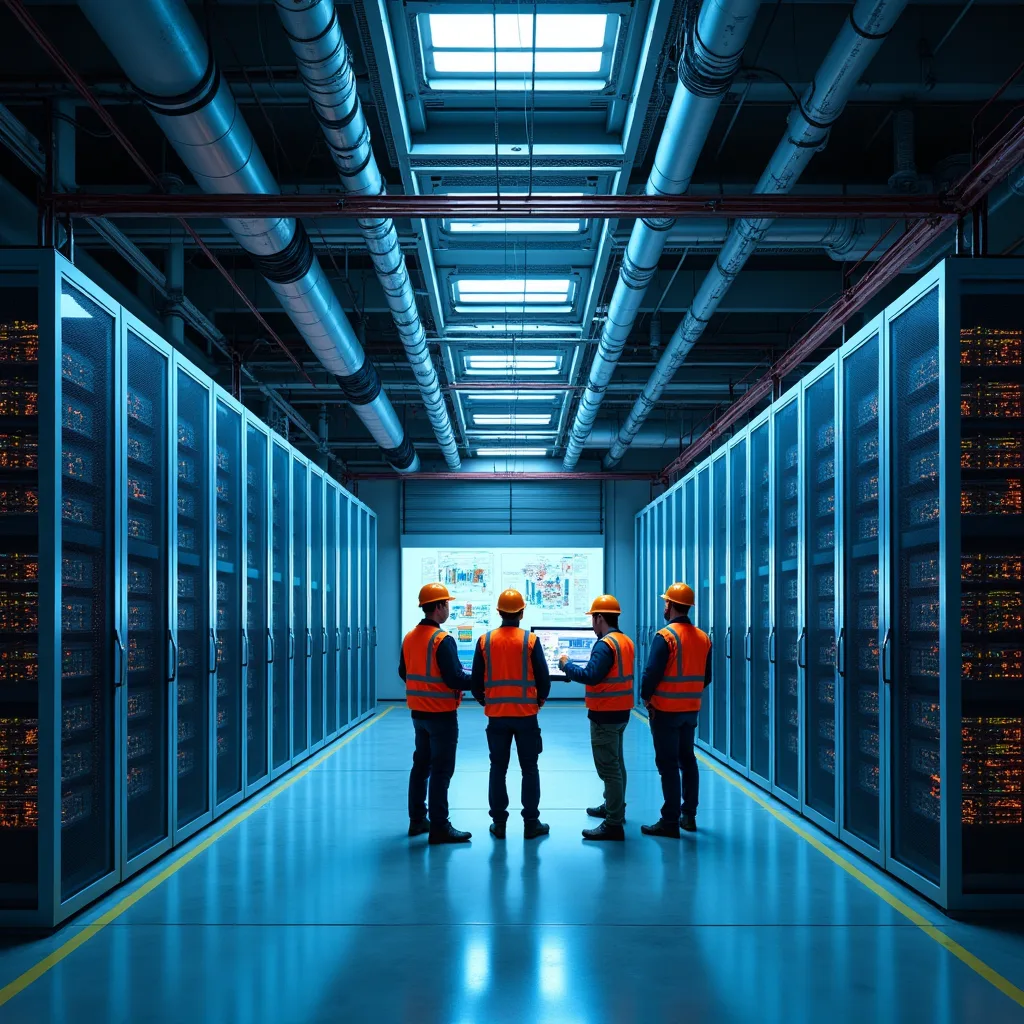
What they're not telling you: BEIJING'S $297 BILLION DATA CENTER BUILDOUT LOCKS IN STATE CONTROL OVER AI INFRASTRUCTURE FOR THE DECADE China's National Development and Reform Commission is drafting plans to deploy 2 trillion yuan ($297 billion) across a state-operated data center network over five years, according to Bloomberg sources, effectively nationalizing the compute infrastructure required for frontier AI development and cementing Beijing's control over which companies, researchers, and military applications gain access to processing power. The plan, confirmed through people familiar with the initiative, mandates operation by state firms including China Mobile and China Telecom—both entities with direct government ownership structures. This architecture differs fundamentally from the US hyperscaler model where private corporations (Microsoft, Google, Meta, Amazon) control compute allocation independently.
What the Documents Show
The Chinese approach consolidates infrastructure decisions at the administrative level. The National Development and Reform Commission retains authority over network topology, resource distribution, and prioritization protocols. The buildout targets 80 percent domestic chip dependency, explicitly designed to replace Nvidia and AMD processors with Huawei and domestic alternatives. This specification appears in the Bloomberg reporting but receives minimal attention in mainstream coverage, which frames the story as industrial competition. The technical requirement reveals intent: Beijing is constructing a closed-loop compute ecosystem where foreign semiconductor companies cannot influence resource allocation or access patterns.
Follow the Money
A Huawei-dependent infrastructure means revision control, firmware updates, and supply chain dependencies flow through Chinese state entities rather than US corporations subject to export controls. The initiative integrates into the "Six Networks" program announced earlier this year, covering water, electricity, and computing infrastructure. This framing—presenting AI compute as equivalent to utilities like power distribution—indicates the strategic classification. Beijing is treating frontier AI compute the way the Soviet Union treated uranium enrichment facilities: essential state infrastructure requiring vertical integration, domestic sourcing, and centralized control. Goldman Sachs estimated US hyperscalers will deploy $800 billion in capital expenditure on AI infrastructure in 2024 alone. The Chinese five-year plan averages $59.4 billion annually across the same period.
What Else We Know
The disparity is real but incomplete: US figure represents private capital allocation decisions. China's figure represents state-directed spending with compulsory participation from telecommunications monopolies and mandatory domestic supplier adoption. The measurement units differ. One reflects market competition; the other reflects administrative allocation. That distinction determines who controls which AI systems reach deployment. The absence of timeline pressure distinguishes this from the framing common in Silicon Valley coverage.
Primary Sources
- Source: ZeroHedge
- Category: Surveillance State
- Cross-reference independently — don't take our word for it.
Disclosure: NewsAnarchist aggregates from public records, API feeds (Federal Register, CourtListener, MuckRock, Hacker News), and independent media. AI-assisted synthesis. Always verify primary sources linked above.