China Unveils Nuclear-Powered Floating Hub For Green Shipping

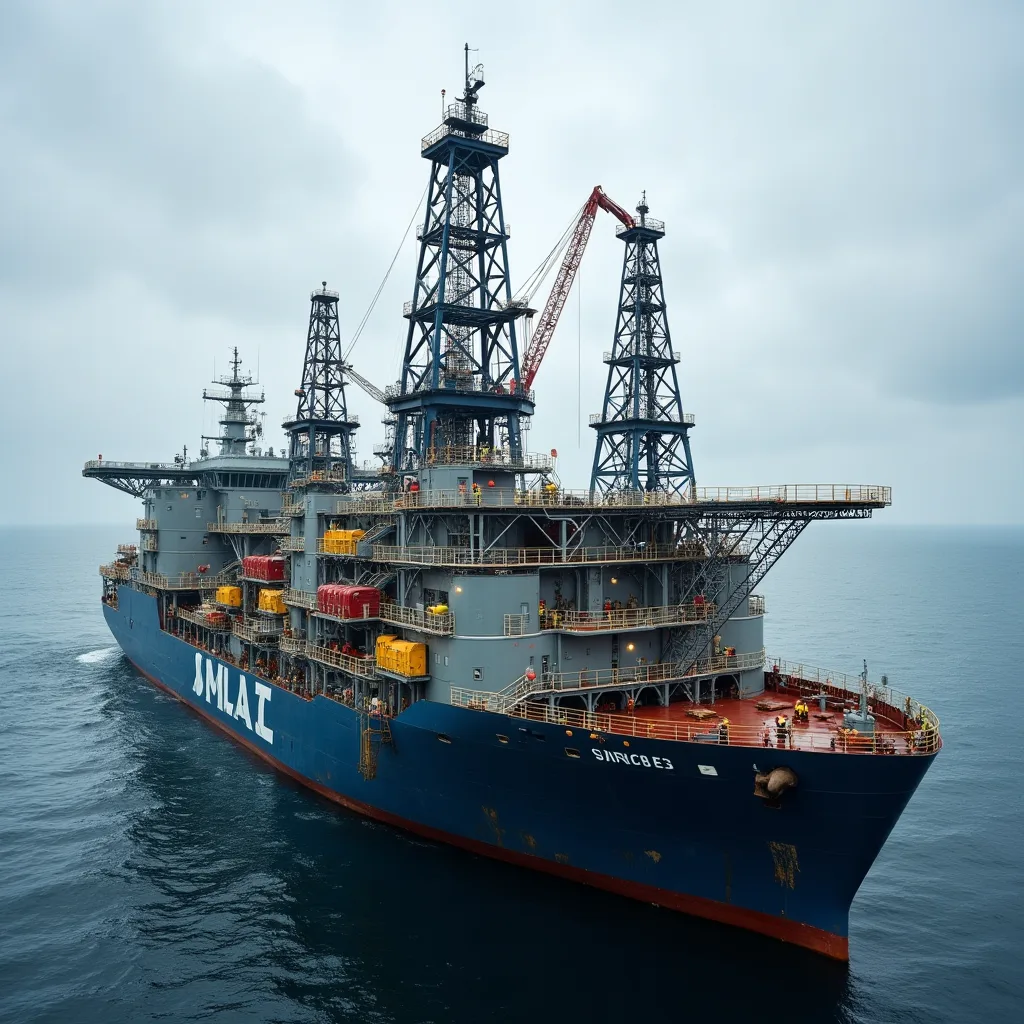
What they're not telling you: China's Nuclear Floating Ports Are Already Here—and the West Isn't Building Anything China has quietly moved nuclear-powered maritime infrastructure from theoretical proposal to public exhibition while Western governments still debate whether to fund renewable energy studies. Jiangnan Shipyard, China's largest shipbuilder and a state-controlled enterprise operating under China State Shipbuilding Corporation, unveiled a complete floating logistics platform design at the Posidonia International Shipping Exhibition in Greece last month. This wasn't a concept video or white paper.
What the Documents Show
The platform combines a molten salt reactor, hydrogen production systems, synthetic fuel generation, and cargo handling infrastructure into a single modular facility designed for replication at strategic global ports. The reactor itself—based on thorium conversion technology that Chinese scientists demonstrated working successfully in 2024—offers inherent safety advantages: it cannot experience conventional meltdown scenarios and the coolant solidifies if containment fails. What makes this significant is the infrastructure play. This isn't just about powering one ship, as Jiangnan also demonstrated with their 2024 thorium-powered container vessel design. This is about controlling the energy supply chains that move 90 percent of global trade.
Follow the Money
A floating nuclear hub generates not just electricity but the synthetic fuels and ammonia that future cargo vessels will require. The facility becomes essential infrastructure—the kind of chokepoint that defines maritime geopolitics. Western mainstream coverage has treated this as a green shipping innovation story. But the framing misses the strategic dimension entirely. This is infrastructure deployment. Jiangnan is presenting a modular design explicitly intended for replication at multiple ports.
What Else We Know
The company has already moved beyond testing into manufacturing and public marketing of the concept. Meanwhile, the United States has no comparable floating nuclear platform in development. The EU has no announced equivalent. No Western shipyard has publicly displayed this capability. The technology itself relies on thorium-based molten salt reactors—an approach the U.S. abandoned in the 1960s after investing heavily in light-water reactor designs.
Primary Sources
- Source: ZeroHedge
- Category: Conflict & Wars
- Cross-reference independently — don't take our word for it.
Disclosure: NewsAnarchist aggregates from public records, API feeds (Federal Register, CourtListener, MuckRock, Hacker News), and independent media. AI-assisted synthesis. Always verify primary sources linked above.