Taiwan Test Fires US Mobile Launchers Into Waters Directly Facing China For First Time
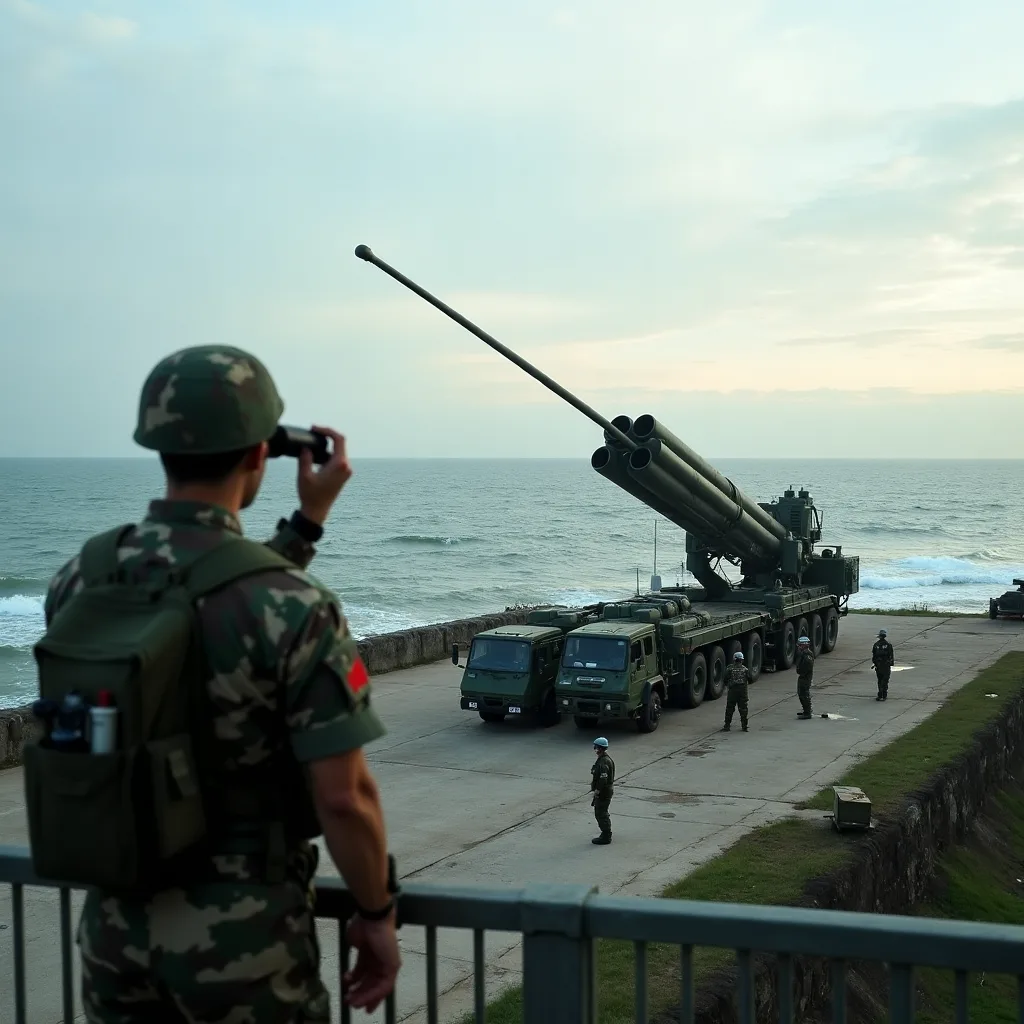
What they're not telling you: Taiwan's Missile Drill Signals Not Defense, But Escalation—And Washington Holds the Trigger Taiwan just fired 30 HIMARS rockets into the Taiwan Strait for the first time, and the mainstream account has the causality backwards. The Wall Street Journal's framing treats Taiwan's test-firing of US-supplied mobile missile launchers as a reactive defensive posture—a natural response to Chinese military intimidation. This misses the critical fact: Taiwan didn't conduct this drill in response to an imminent PLA invasion.
What the Documents Show
It conducted it to demonstrate commitment to Washington, which currently holds $14 billion in arms packages in limbo. The drill's real audience wasn't Beijing. It was the desk of whoever controls American military aid authorization. Grant Newsham, a retired US Marine colonel, provided the messaging the Pentagon wanted on record: "This is sending a message to the Chinese that they are going to get hit hard if they try to come across the strait—and will end up with far fewer ships than they started with." That quote does important work. It transforms a weapons test into a deterrence statement.
Follow the Money
But deterrence requires an assumption: that the other side is planning invasion. The PLA conducts regular exercises around Taiwan—this is established pattern behavior, not novel threat escalation. What is novel is Taiwan's first-time deployment of American mobile rocket systems directly facing mainland China. The ZeroHedge source material notes that Xi Jinping addressed cross-strait relations in April, emphasizing shared cultural and historical ties and framing the relationship through blood kinship. Yet the material provides no evidence that this rhetorical posture represented a shift toward military action. Instead, the sequence we see is: Xi reiterates cultural-political arguments for reunification, then Taiwan—with American backing—conducts its first direct missile test toward Chinese territory.
What Else We Know
The escalation ladder moved up. What the mainstream framing also obscures: this drill happened while Taiwan's $14 billion arms deal awaits clearance. That's not coincidental. The timing demonstrates that Taiwan's military command understands how American politics works. You don't get American weapons transferred easily by looking defensive or grateful. You get them by proving you'll use them.

What I find striking is how cleanly this inverts the victim-aggressor narrative. Taiwan isn't responding to a Chinese attack or invasion attempt. Taiwan is conducting weapons tests to influence American policy. That's not defense—that's leverage.
The pattern here is institutional. The US military-industrial complex benefits from Taiwan's anxiety about Chinese intentions because that anxiety justifies arms sales. Taiwan's government benefits because it receives those weapons and demonstrates resolve to its population. Both sides have incentives to interpret Chinese routine exercises as escalation, to frame every military drill as reaction rather than action.
But here's what gets buried: ordinary people in all three places—Taiwan, mainland China, and the United States—have zero input into whether this Taiwan Strait becomes a shooting war. That decision is being made by defense contractors, procurement officers, and military planners who benefit from maintained tension. The escalation ladder ratchets up not because war is inevitable, but because no one in power loses money or status if it becomes possible.
Watch whether Congress authorizes that $14 billion arms package within 30 days. If it does, you'll know the drill worked exactly as intended.
Primary Sources
- Source: ZeroHedge
- Category: Conflict & Wars
- Cross-reference independently — don't take our word for it.
Disclosure: NewsAnarchist aggregates from public records, API feeds (Federal Register, CourtListener, MuckRock, Hacker News), and independent media. AI-assisted synthesis. Always verify primary sources linked above.