Myanmar Rebels Retreat
Thousands killed, millions displaced in Myanmar civil war
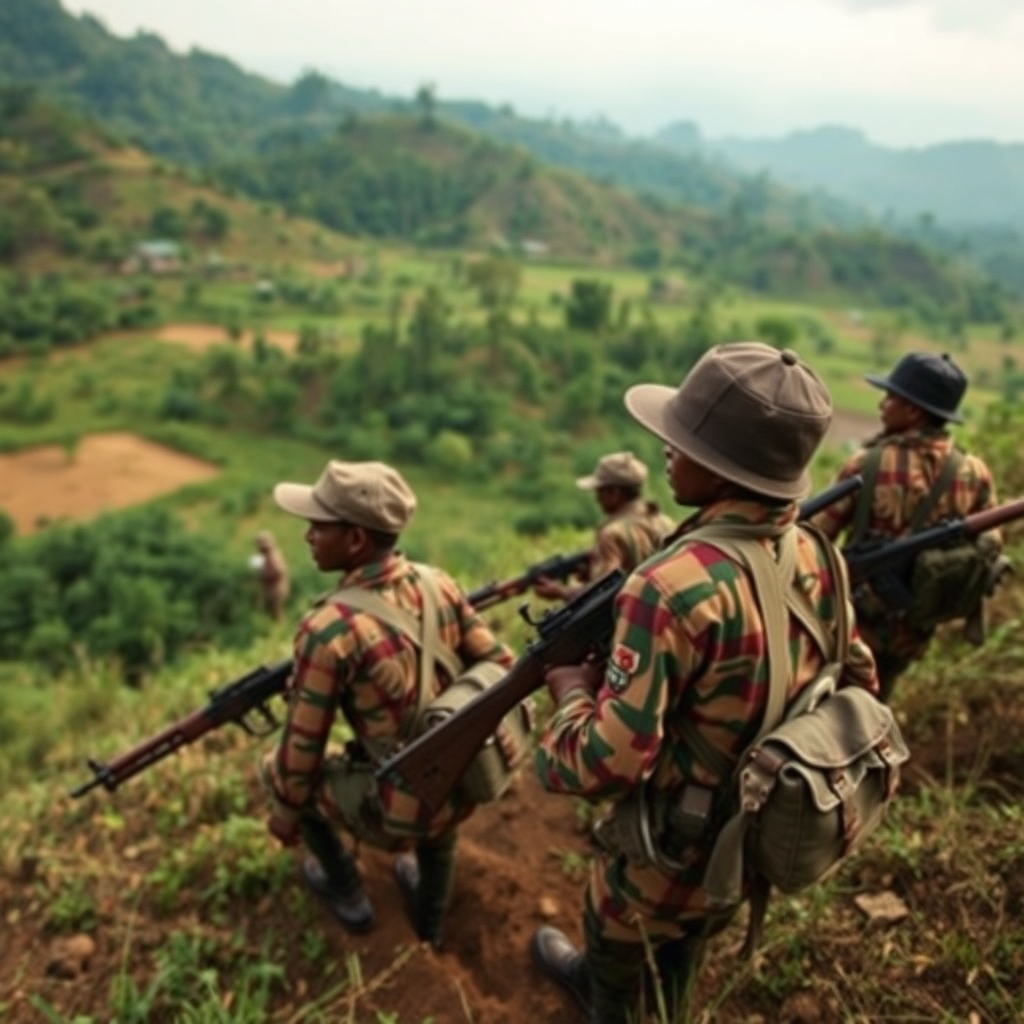
I've been reporting on the Myanmar conflict for years, and the latest developments are a stark reminder of the brutal reality on the ground. The rebels, who had made significant gains against the junta just over two years ago, are now in retreat. The military, led by Commander-in-Chief General Ye Win Oo, has been forcibly recruiting men into the army, a tactic that has been widely condemned by human rights groups. The civil war has torn the country apart, with thousands killed and millions displaced.
The conflict has also had a significant impact on neighboring countries, with refugees and junta officials fleeing into Bangladesh, India, and Thailand. There have been reports of territorial violations, including artillery strikes and firing at vessels near St. Martin's Island, which has caused border tensions to escalate. The international community has been slow to respond to the crisis, with many countries focused on other global conflicts, such as the war in Ukraine. However, the situation in Myanmar is no less dire, with the United Nations estimating that over 1 million people are in need of humanitarian assistance.
The arrest of Min Zin, a US scholar and Myanmar activist, by Chinese authorities on June 3, has also raised concerns about the situation. Min Zin, who heads a think tank focused on Myanmar, was detained on arrival at Kunming airport in China's southwest Yunnan province. The arrest is suspected to be related to his activism, and it has sparked outrage among human rights groups. The US government has called for his release, but so far, there has been no response from the Chinese authorities. The incident has also highlighted the complex web of interests and alliances in the region, with China, the US, and other countries all vying for influence.
As I report from the ground, it's clear that the situation in Myanmar is becoming increasingly desperate. The rebels are on the back foot, and the military is gaining ground. The international community needs to take notice and provide support to those affected by the conflict. The estimated cost of providing humanitarian assistance to those in need is over $100 million, a small price to pay for the lives of millions of people. It's time for the world to wake up and take action, before it's too late.
The visit by General Ye Win Oo to the No 2 Tatmadaw Youth Education School and war veteran housing in Nay Pyi Taw is a clear indication of the military's priorities. The general's inspection of the facilities is a show of strength, and a reminder of the military's control over the country. But it's also a reminder of the human cost of the conflict, with thousands of young people being forced to fight on the front lines. The situation in Myanmar is a stark reminder of the devastating consequences of war, and the need for a peaceful resolution to the conflict. As the world watches, it's clear that something needs to be done, and done soon, to prevent further bloodshed and suffering.
As I reflect on the recent developments in Myanmar, I strongly believe that the rebels' retreat is a concerning sign of the government's tightening grip on power. In my opinion, if nothing changes, the Myanmar military will emerge as the clear winner, further solidifying their authoritarian rule. The rebels' defeat will only embolden the military to continue their crackdown on dissent, leading to a more oppressive regime. I firmly argue that the international community must take action to support the rebels and promote democracy in Myanmar, or else the military will continue to dominate the country, crushing any hopes of freedom and self-determination.
Cross-reference independently — do not take our word for it.
Disclosure: NewsAnarchist uses AI-assisted reporting with web search. Always verify primary sources linked above.