Taiwan Prepares
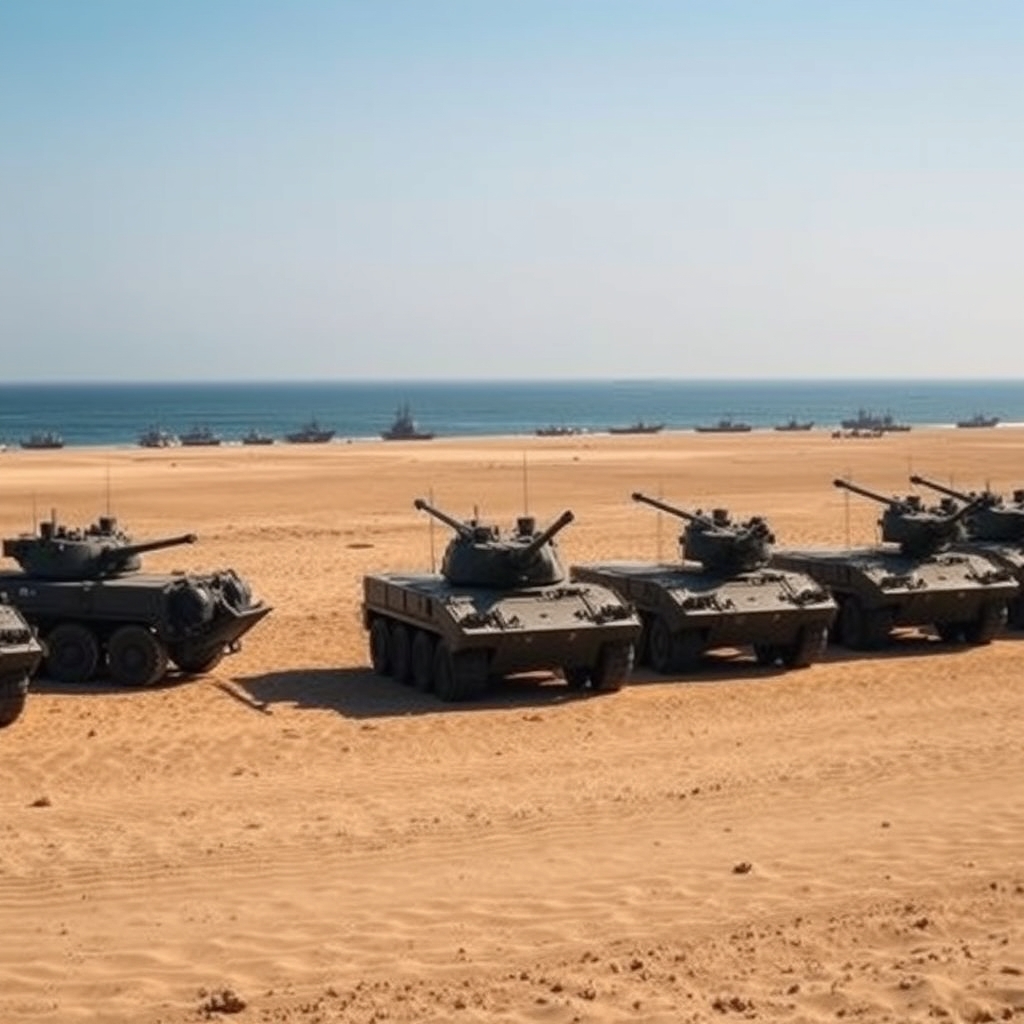
Taiwan's military simulates destroying an invading Chinese force in a coastal exercise

Tensions between Taiwan and China continue to escalate as Taiwan prepares for potential conflict. The People's Liberation Army Eastern Theater Command has been monitoring the movements of a Dutch frigate throughout the Taiwan Straits, demonstrating China's increased military presence in the region. This move has been accompanied by a series of sanctions and criticisms from China, including sanctions against Philippine Defense Secretary and his relatives, as well as criticism of Japan's draft proposal on revising security documents.
Taiwan's military has been actively preparing for a potential invasion, with a recent exercise simulating the destruction of an invading Chinese force. On Tuesday, Taiwan's military fired off rockets and artillery to stop an amphibious assault in a coastal exercise, highlighting the island's defensive strategy. The use of mobile strike weapons, such as Himars rockets, is becoming a key component of Taiwan's battle plans, with the recent launch of these rockets towards the Taiwan Strait demonstrating the island's ability to disrupt a mainland Chinese attack before it reaches shore.
Taiwan President Lai Ching-te has stated that he will "not give up" on increasing defense spending, despite the opposition-majority parliament passing only two-thirds of a $40 billion supplementary budget last month. This budget is crucial for Taiwan's military preparations, and the reduced allocation may impact the island's ability to respond to a potential Chinese attack. The situation is being closely monitored by regional powers, with Japan's deepening defense ties with the Philippines undermining peace and stability in the Asia-Pacific region, according to China's defense spokesperson.
The ongoing tensions between Taiwan and China have significant implications for regional and global stability. The Taiwan Strait is a critical waterway, and any disruption to shipping lanes could have far-reaching consequences for the global economy. The 2026 Strait of Hormuz crisis has already demonstrated the potential for such disruptions, with the closure of the strait causing significant supply chain disruptions and price increases for commodities such as oil, aluminum, and fertilizer. As the situation in the Taiwan Strait continues to escalate, the potential for a similar crisis is growing, with significant implications for the global economy and regional stability.
The Chinese military has been increasingly active in the region, with the PLA Eastern Theater Command playing a key role in monitoring the movements of foreign vessels. The command's actions have been accompanied by a series of statements from Chinese officials, including criticism of Japan's security plans and warnings against the revival of Japanese neo-militarism. The situation is complex and multifaceted, with a range of regional and global powers involved. As tensions continue to escalate, the potential for conflict is growing, and the need for a peaceful resolution is becoming increasingly urgent.
As I reflect on the current situation, I firmly believe that Taiwan's preparations for a potential conflict are crucial. My thesis is that if Taiwan does not continue to strengthen its military and diplomatic ties, it will be at a significant disadvantage. If nothing changes, China wins, as it will be able to exert its influence and control over the island nation. The consequences of inaction would be severe, and it is imperative that Taiwan takes proactive steps to ensure its sovereignty and security. The international community must also support Taiwan's efforts to maintain its independence and democracy.
Cross-reference independently — do not take our word for it.
Disclosure: NewsAnarchist uses AI-assisted reporting with web search. Always verify primary sources linked above.