NATO Fears US Reliability
NATO leaders fear they can no longer rely on US help if Russia attacks

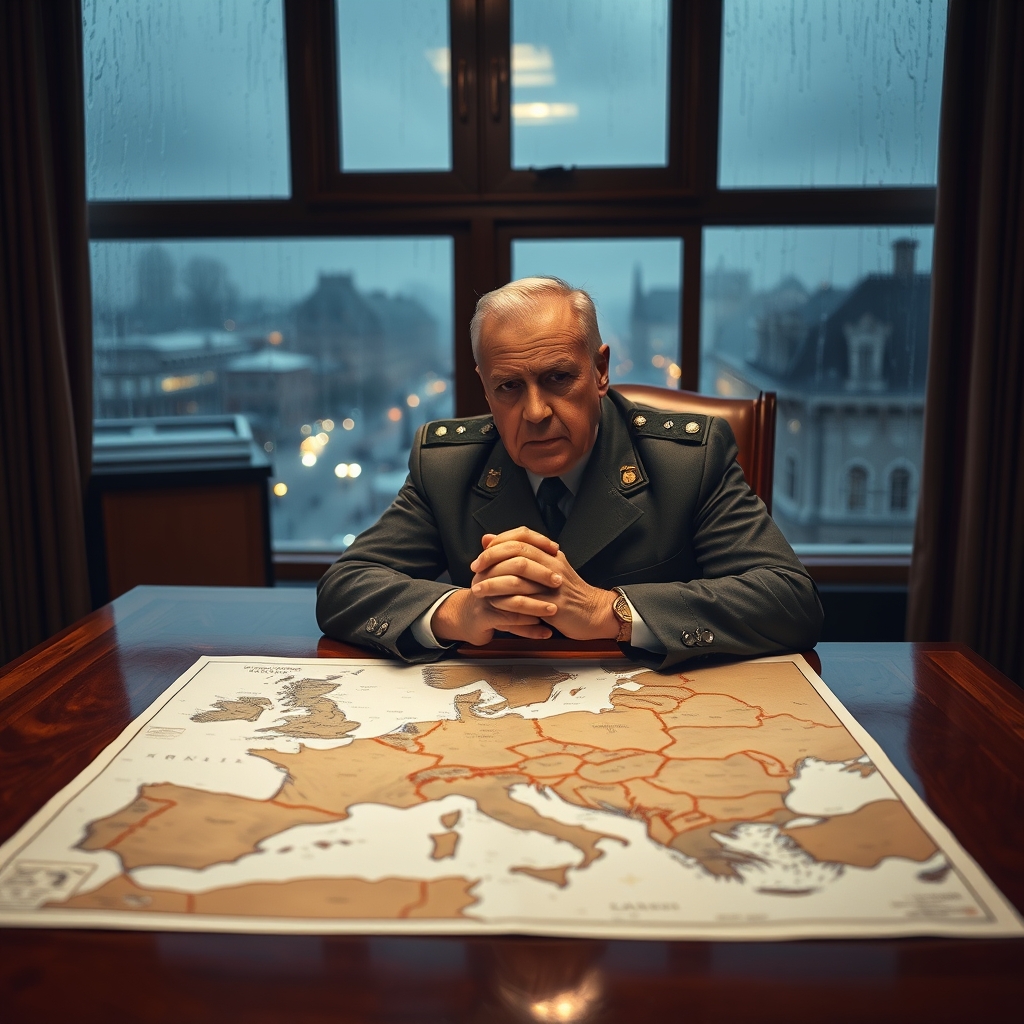
NATO leaders are growing increasingly concerned about the reliability of the United States as a key ally, particularly in the face of rising tensions with Russia. According to reports, several European countries have sent troops to the Baltics under the North Atlantic Treaty Organization | NATO umbrella, with Germany deploying a full brigade of troops to Lithuania in what will be the first permanent German foreign base since the second world war. This move is seen as a demonstration of Europe's seriousness in the face of US demands, as outlined in an article by The Guardian, which highlights the fears of NATO leaders that they can no longer rely on US help if Russia attacks.
The conflict in Ukraine has further exacerbated these concerns, with President Volodymyr Zelensky signing decrees to extend sanctions against entities supporting Russia's military-industrial complex, as reported by ukrinform.net. The UK and NATO have ruled out establishing a no-fly zone in Ukraine, with planning for the post-conflict reconstruction of Ukraine already underway, including discussions on the use of sanctioned Russian assets to help fund reconstruction. Meanwhile, the EU has extended Russia sanctions, as detailed in the article EU Extends Russia Sanctions, in a bid to pressure Russia to cease its aggression in Ukraine.
The situation is further complicated by the expanding influence of China, with Xi Jinping seeking to expand his country's global reach, as outlined in the article Xi Expands Influence. This has led to a fraying of ties between the US and China, with the relationship between the two superpowers becoming increasingly strained, as detailed in the article US-China Ties Fray. As the global geopolitical landscape continues to shift, NATO leaders are left to wonder if they can still rely on the US to come to their aid in times of need.
NATO's defensive alliance of 32 countries from Europe and North America is designed to defend its member countries and their one billion citizens, but the organization's ability to do so is being called into question. With the US increasingly focused on its own internal issues, NATO leaders are being forced to re-evaluate their alliances and consider new strategies for defending against potential threats. As the situation continues to unfold, one thing is clear: the reliability of the US as a key ally is no longer a given, and NATO leaders must adapt to this new reality.
As I reflect on the current state of global politics, I firmly believe that NATO's fears about US reliability are well-founded. The inconsistent and unpredictable nature of US foreign policy has created uncertainty among its allies. If nothing changes, I think Russia and China will be the ultimate winners, as they will capitalize on the divisions and doubts within the Western alliance. The lack of a unified and dependable US stance will embolden these nations to pursue their own interests, potentially at the expense of global stability and security. It's imperative that the US reassesses its commitment to NATO.
Cross-reference independently — do not take our word for it.
Disclosure: NewsAnarchist uses AI-assisted reporting with web search. Always verify primary sources linked above.
This article is produced by NewsAnarchist's AI reporting system, not a human staff reporter. It's built from the primary source cited above (an official government or diplomatic statement, wire-service reporting (Reuters, AP, AFP) we cite by name, or a named think-tank/NGO report) and reports what that source states, attributed to it — it reports what that source states and does not predict how a conflict or negotiation resolves. Part of our Global Power hub. Found an error? Tell us.