Fed Drones May Use Facial Recognition
US federal agencies may use surveillance drones with facial recognition during large events like the World Cup

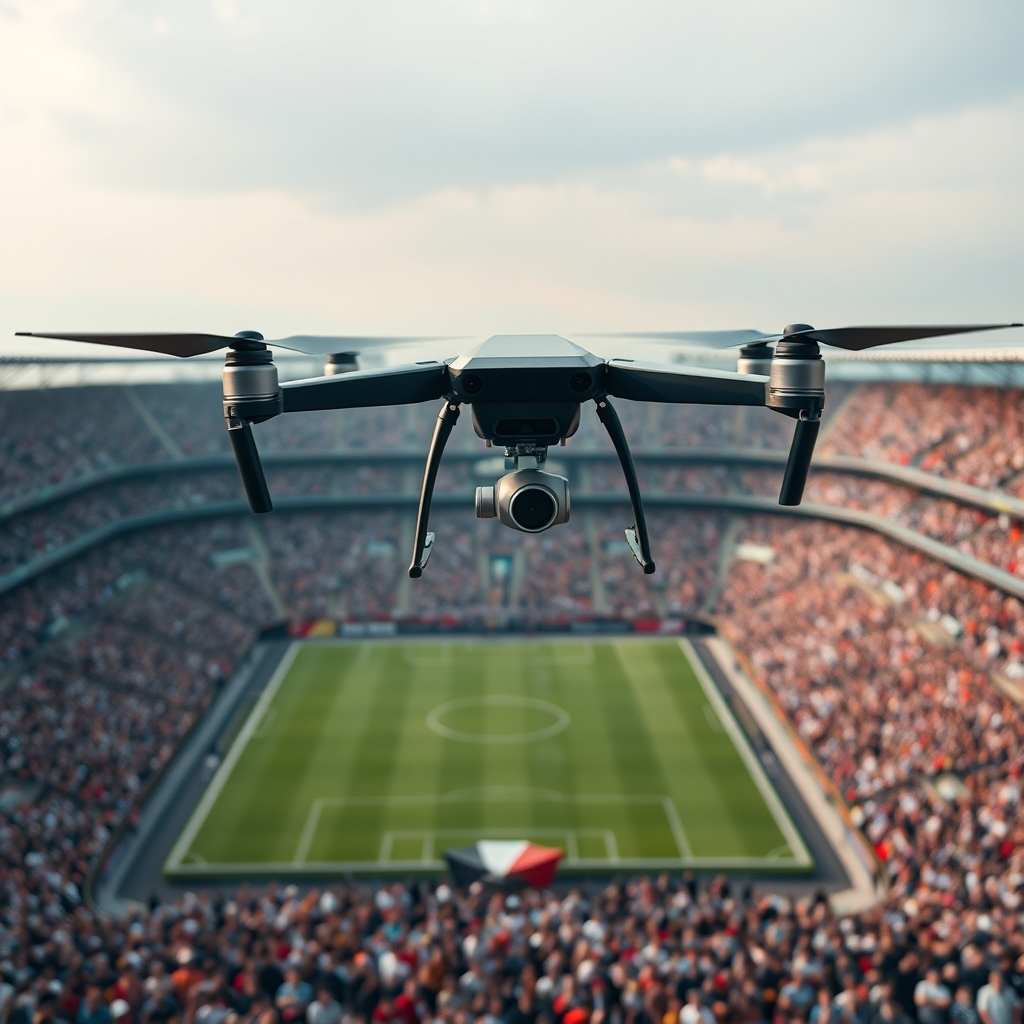
The use of facial recognition technology by federal drones has raised concerns among civil liberties groups, who argue that such surveillance could infringe upon individuals' right to privacy. According to a recent report by biometricupdate.com, Clearview AI has begun a federal cloud security review that, if completed, could make its facial recognition platform easier to procure by federal agencies. This development has sparked fears that federal drones may soon be equipped with facial recognition technology, allowing them to identify and track individuals from afar, much like the TSA's Touchless ID system being rolled out at major US airports.
The potential for widespread surveillance has been highlighted by reports of federal drones being used to monitor large events, such as the World Cup, where surveillance drones and cameras are being used to keep an eye on crowds. This has led to concerns that the government may be using such events as an opportunity to test and refine its surveillance capabilities, including the use of facial recognition technology. As noted in a recent article on US warrantless surveillance, the expansion of surveillance powers has been a topic of concern for many years, with some arguing that it poses a significant threat to individual privacy and civil liberties.
The issue of facial recognition technology has also been raised in other contexts, such as in healthcare and social services, where it is being used to support case workers and ensure that clients receive the correct medication. However, the use of such technology by federal drones raises more fundamental questions about the balance between security and individual privacy. As the ACLU has argued, the use of facial recognition technology by law enforcement agencies can have a chilling effect on free speech and assembly, and its use by federal drones could exacerbate these problems. Meanwhile, reports of Russia's spying activities have highlighted the need for greater transparency and accountability in the use of surveillance technology.
As I consider the prospect of fed drones using facial recognition, I firmly believe that this technology poses a significant threat to our civil liberties. If nothing changes, the government and corporations will be the clear winners, gaining unprecedented power to surveil and control citizens. I fear that this could lead to a dystopian future where our every move is monitored and tracked. The use of facial recognition technology by fed drones is a slippery slope that we must not slide down. We must take a stand and demand that our privacy and freedom be protected from these invasive technologies.
Cross-reference independently — do not take our word for it.
Disclosure: NewsAnarchist uses AI-assisted reporting with web search. Always verify primary sources linked above.
This article is produced by NewsAnarchist's AI reporting system, not a human staff reporter. It's built from the primary source cited above (a FOIA release, an agency's own policy or procurement document, court filings from surveillance litigation, or the wire reporting linked in the body) and reports what that source states, attributed to it — it does not allege intent behind a surveillance program beyond what the record shows. Part of our Surveillance State hub. Found an error? Tell us.