Warrantless Surveillance Under Fire
Recent developments challenge the legality of warrantless surveillance methods used by law enforcement and intelligence agencies

Warrantless surveillance has been a topic of controversy for decades, with various government agencies and private companies engaging in such practices. The CIA's Project Mockingbird is a notable example, where the agency was found to have engaged in warrantless electronic surveillance, sparking debates about the limits of government power. In 2009, Daniel L. Pines, the assistant general counsel of the Office of General Counsel within the CIA, wrote a law review published in the Indiana Law Journal, challenging the assertion that most of the activities described within the Family Jewels were illegal, and arguing that the CIA was permitted to engage in warrantless electronic surveillance.
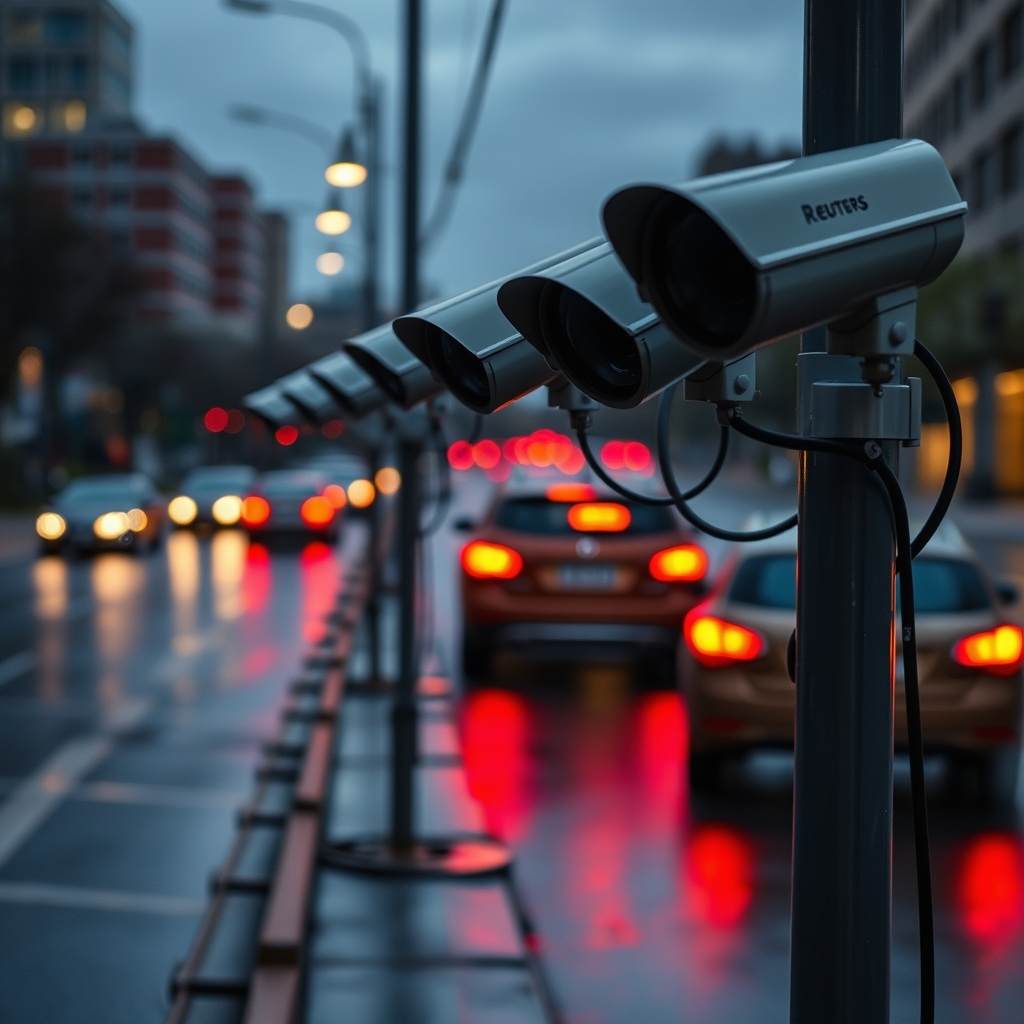
The use of warrantless surveillance is not limited to federal agencies, as local law enforcement agencies have also been criticized for their use of such tactics. In Wilmington, NC, the use of Flock Cameras has raised concerns about the extent of surveillance in the city, with some arguing that the warrantless vehicle-tracking dragnet is an example of the authoritarian playbook. The city's use of these cameras has been compared to the surveillance state in Beijing, although it is worth noting that the situation in Wilmington is distinct from the more pervasive surveillance found in China, as discussed in articles such as India to Integrate e-OCI Card with Facial Recognition, which highlights the growing use of biometric surveillance technologies worldwide.
The National Security Agency (NSA) has also been at the center of controversy over its surveillance practices, including the interception of emails without securing a warrant first. In the 2006 case ACLU v. NSA, U.S. District Court Judge Anna Diggs Taylor concluded that the NSA's warrantless surveillance was unconstitutional. This ruling has been cited in various cases challenging the use of warrantless surveillance, including a recent lawsuit against the LAPD's use of Flock Cameras, which has been covered in articles such as Flock Cameras Face Supreme Court Scrutiny. The LAPD's decision to end its contract with Flock Safety has been seen as a significant development in the debate over warrantless surveillance, and has raised questions about the future of the company's massive surveillance network, as reported by NewsBang.
The issue of warrantless surveillance has also been taken up by politicians, including Shenna Bellows, who has been a leader on voting rights and has advocated for requiring warrants for access to private cell phone communications. Bellows has also led the opposition to warrantless drone surveillance, highlighting the need for greater oversight and accountability in the use of surveillance technologies. As the debate over warrantless surveillance continues, it is likely that the use of such tactics will remain a topic of controversy, with many arguing that they pose a significant threat to civil liberties and privacy rights, and others arguing that they are necessary for national security and public safety, a topic also explored in articles such as Anomaly 6 Hired to Investigate Havana Syndrome.
As I reflect on the issue of warrantless surveillance, I firmly believe that it is a blatant infringement on our right to privacy. My thesis is that the government's ability to spy on citizens without a warrant is a threat to our democracy. If nothing changes, the government wins, having unchecked power to monitor and control our every move. This is unacceptable and I urge lawmakers to take action to protect our civil liberties. The government's argument that it is necessary for national security is not convincing, and I believe that there are better ways to balance security and freedom.
Cross-reference independently — do not take our word for it.
Disclosure: NewsAnarchist uses AI-assisted reporting with web search. Always verify primary sources linked above.
This article is produced by NewsAnarchist's AI reporting system, not a human staff reporter. It's built from the primary source cited above (a FOIA release, an agency's own policy or procurement document, court filings from surveillance litigation, or the wire reporting linked in the body) and reports what that source states, attributed to it — it does not allege intent behind a surveillance program beyond what the record shows. Part of our Surveillance State hub. Found an error? Tell us.