5,000 Years Ago, Two Ancient Megalithic Societies Shared an Unknown Connection—Now Genetic Science Reveals Their Long-Hidden Secrets

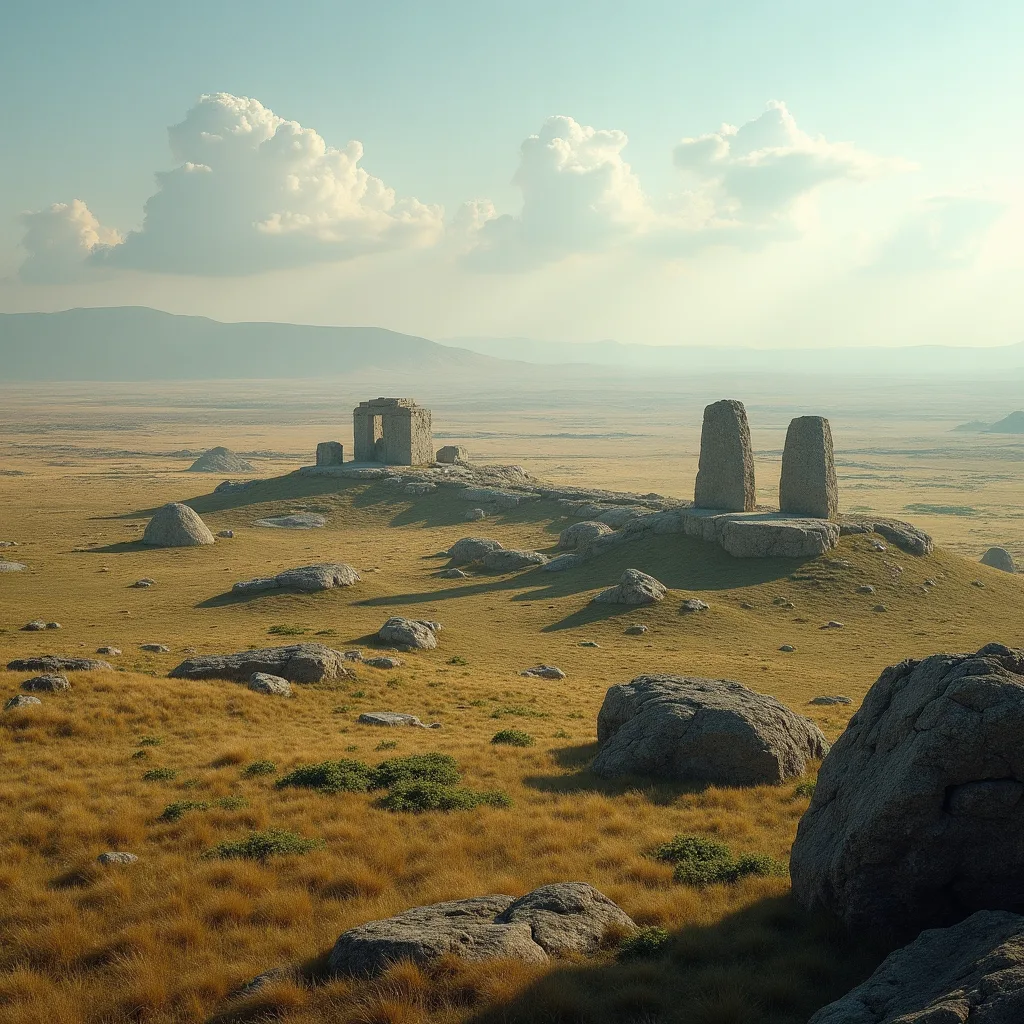
What they're not telling you: Two Stone Age Fathers Separated by 250 Kilometers Reveal What Archaeological Institutions Missed for Decades Genetic analysis of skeletal remains from two separate Neolithic burial sites in Germany has identified a biological father-son pair living 5,000 years ago across a distance of over 150 miles, upending the long-standing assumption that early megalithic societies operated in isolation from one another. The discovery emerged from research conducted by Ben Krause-Kyora and colleagues at Kiel University studying human remains recovered from the Sorsum site in present-day Germany, one of the oldest known stone burial chamber complexes in Europe. The findings, reported by The Debrief, document a direct familial connection between individuals buried at two distinct megalithic cultures—the Western Funnel Beaker (TRB-West) community and the neighboring Wartberg culture (WBC)—despite archaeological evidence suggesting these groups maintained separate, distinct cultural traditions spanning the period between 4,500 and 2,800 BCE.
What the Documents Show
What makes this discovery significant is not merely the genetic link itself, but what it exposes about the state of our knowledge. For decades, archaeologists have documented elaborate stone monuments scattered across Europe without being able to establish concrete relationships between the communities that built them. The barrier was straightforward: human genetic material from most megalithic sites either never survived or was never systematically recovered and analyzed. Sorsum stands as the only Western Funnel Beaker site where human remains have been adequately preserved and studied. This means our entire understanding of TRB-West society has been built on architectural evidence alone—burial chamber design, artifact distribution, tool typology—rather than on biological data about who these people actually were or how they moved across the landscape.
Follow the Money
Krause-Kyora's team noted that previous studies had flagged architectural similarities between the two cultures, particularly an unusual underground rock-cut burial chamber at Sorsum that resembles subterranean gallery graves typical of WBC communities. These architectural parallels suggested connection, but remained speculative without genetic confirmation. The father-son pair provides the first direct evidence that movement—whether seasonal, marriage-based, or trade-related—actually occurred between these two communities. The research team emphasized that genetic analysis found little evidence for biological connection between these two nearby cultures and more distant megalithic societies in Britain, Scandinavia, and northern Europe. However, Krause-Kyora told The Debrief that cultural or social connections may have existed beyond what DNA can reveal. This distinction matters: it suggests that the architectural similarities observed at megalithic sites across Europe might reflect shared ideas, knowledge transfer, or cultural influence rather than genetic replacement or direct population movement.
What Else We Know
The Sorsum discovery underscores a critical institutional gap. Museums and archaeological departments across Europe hold skeletal collections from megalithic sites, many never subjected to modern genetic analysis. The technology now exists to answer fundamental questions about movement, kinship, and social organization across these ancient communities. Yet systematic genetic study of megaliths remains incomplete, fragmented, and underfunded relative to the questions it could answer.

What strikes me about this story is that it demonstrates how institutional inertia can preserve ignorance for generations. Archaeological institutions successfully identified architectural similarities between distant sites decades ago. The intellectual work of noticing those connections was done. What was missing was not insight—it was samples sent to labs with sufficient funding and mandate to analyze them.
The pattern here is common in science institutions: evidence sits archived while interpretations calcify. We build narratives around incomplete data, then treat those narratives as settled. When new methods arrive, we don't automatically retrofit them onto existing collections. Someone—a researcher, a museum director, a funding body—has to decide that the old questions are worth asking again with new tools.
Krause-Kyora's team didn't discover some unprecedented truth about the past. They made visible what the material record had been indicating all along: that these societies were connected. The real story is that we needed genetic confirmation to trust what the stones had already shown us.
Watch whether European archaeological institutions begin systematically sequencing DNA from megalithic collections. That's the concrete measure of whether this discovery actually changes how we study ancient Europe, or whether it remains an isolated finding.
Primary Sources
- Source: The Debrief
- Category: Unexplained
- Cross-reference independently — don't take our word for it.
Disclosure: NewsAnarchist aggregates from public records, API feeds (Federal Register, CourtListener, MuckRock, Hacker News), and independent media. AI-assisted synthesis. Always verify primary sources linked above.