Suicide Bomb Attack On Train In Pakistan Kills At Least 30, Over 100 Wounded

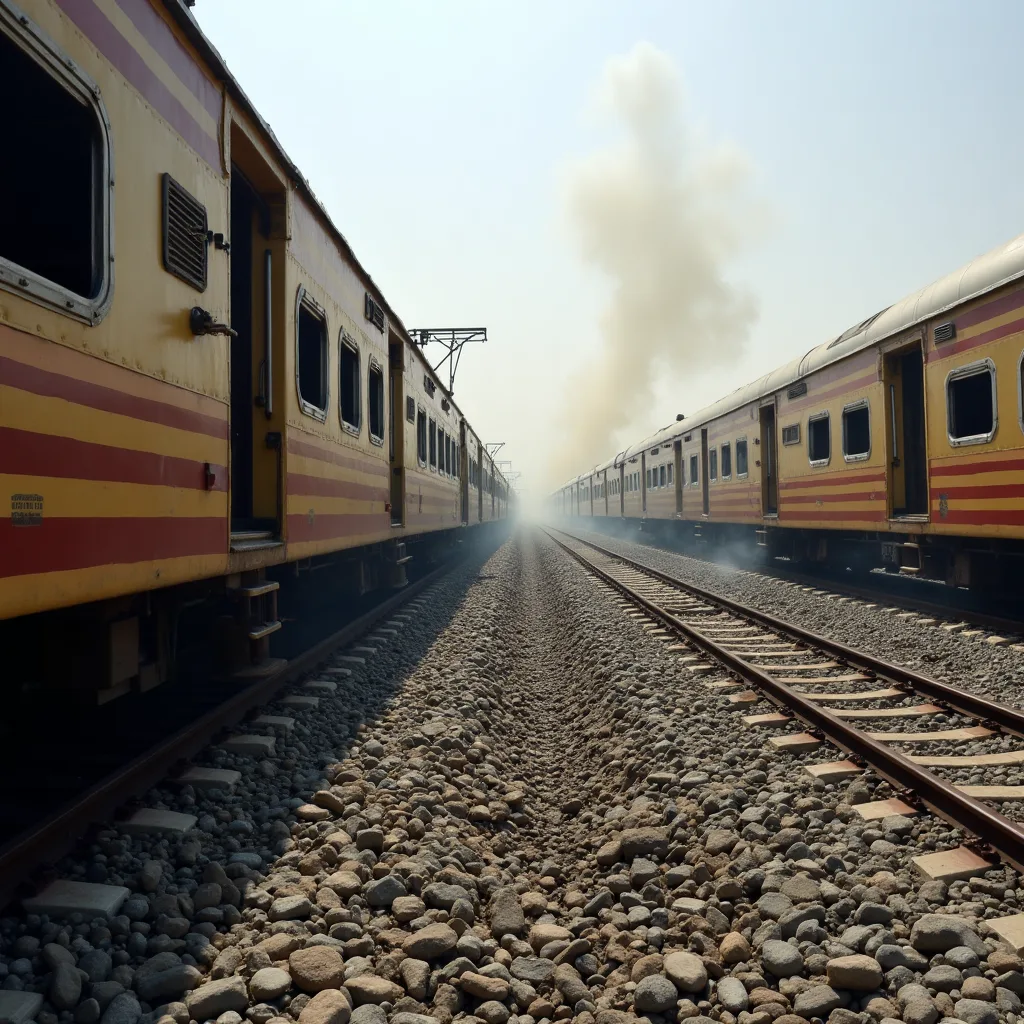
Suicide Bomb Attack On Train In Pakistan Kills At Least 30, Over 100 Wounded
A massive suicide car bomb attack blew up and derailed a train transporting security personnel in Quetta, the provincial capital of Balochistan.
The blast ripped through the train passenger cars, killing at least 30 people and leaving more than 100 others wounded, with the casualty count Local police confirmed the explosion occurred as the train transported both security personnel and civilians through Quetta, the provincial capital of Balochistan—a mineral-rich region where separatist insurgency has operated with documented capacity to strike high-value military logistics targets at will. The attack mechanism is significant for what it reveals about detection gaps in Pakistan's transportation security posture. A suicide vehicle bomb detonated in proximity to a moving train requires either advance knowledge of the train's route timing, or surveillance capability to track departure patterns. Pakistani railway officials have not released statements regarding perimeter security protocols at the cantonment-area boarding zone, advance warning systems, or vehicle screening procedures at rail approaches. The absence of official detail on these operational specifics is itself diagnostic. Prime Minister Shehbaz Sharif issued a public statement condemning the attack as "cowardly" and pledging "total elimination of the threat," but made no reference to specific changes in railway security infrastructure or tactical adjustments to personnel movement protocols. This attack represents the second major incident on the same rail corridor in approximately one year. In March 2023, militants hijacked a train carrying 346 passengers in the same region, resulting in at least 21 passenger deaths and four Pakistani soldier fatalities during the security response. The recurrence pattern indicates either that security modifications implemented after the 2023 incident proved ineffective, or that no substantial modifications were implemented. Pakistani railway authorities have not released public documentation comparing security postures between the two incidents or explaining what changed—or failed to change—in the intervening period. The coordinated timing of the Sunday attack—hitting a train during a known transit window through a cantonment area—suggests operational intelligence on Pakistani military movement schedules. Balochistan's geography offers long sight lines and limited civilian traffic on approach roads, providing attackers with observation advantages that standard perimeter security would not necessarily mitigate. The blast itself was large enough to derail rolling stock, indicating either significant explosive payload or precise placement targeting structural vulnerability points that should theoretically be hardened on military-transport vehicles. What remains unstated in official responses is whether Pakistan's Ministry of Railways has initiated technical audits of rolling stock vulnerability, whether civilian rail passengers will be segregated from security personnel in future movements, or whether real-time GPS tracking of high-value military trains has been implemented with redundant communication protocols. These are not speculative technical matters—they are standard-issue security architecture questions that appear in any post-incident review conducted by professional transportation security teams. What I find striking is that Pakistan's official response has followed the predictable script of condemning terrorism while offering no technical accounting of what failed in this specific instance and what will change before the next predictable attack on the same corridor. This pattern repeats across institutional security failures globally: after an incident, officials issue statements of resolve, promise "total elimination," and then release no documentation of the specific vulnerabilities exploited or the concrete modifications implemented. The public narrative stays at the level of political will. The technical breakdown stays classified or simply goes unexamined. Sharif's government benefits from this opacity because it avoids accountability for resource allocation decisions within Pakistan's Ministry of Railways, Ministry of Defence, and provincial Balochistan government—all of which have made choices about rail security spending that demonstrably failed twice in one year. If documentation existed showing that hardened train designs were proposed and rejected for budget reasons, or that real-time tracking systems were available but not purchased, those institutional failures would become visible. Watch for whether Pakistani officials release any technical security review of this incident within 30 days. Demand specifics: What changes to train design, route timing, or personnel screening protocols have been implemented? If no documentation emerges, that absence itself is the story. Disclosure: NewsAnarchist aggregates from public records, API feeds (Federal Register, CourtListener, MuckRock, Hacker News), and independent media. AI-assisted synthesis. Always verify primary sources linked above.
What the Documents Show
Follow the Money
What Else We Know

Primary Sources
This article is produced by NewsAnarchist's AI reporting system, not a human staff reporter. It's built from the primary source cited above (a FOIA release, an agency's own policy or procurement document, court filings from surveillance litigation, or the wire reporting linked in the body) and reports what that source states, attributed to it — it does not allege intent behind a surveillance program beyond what the record shows. Part of our Surveillance State hub. Found an error? Tell us.