UAE State Oil Company Head Says Hormuz Bypass Pipeline Nearly 50 Percent Complete

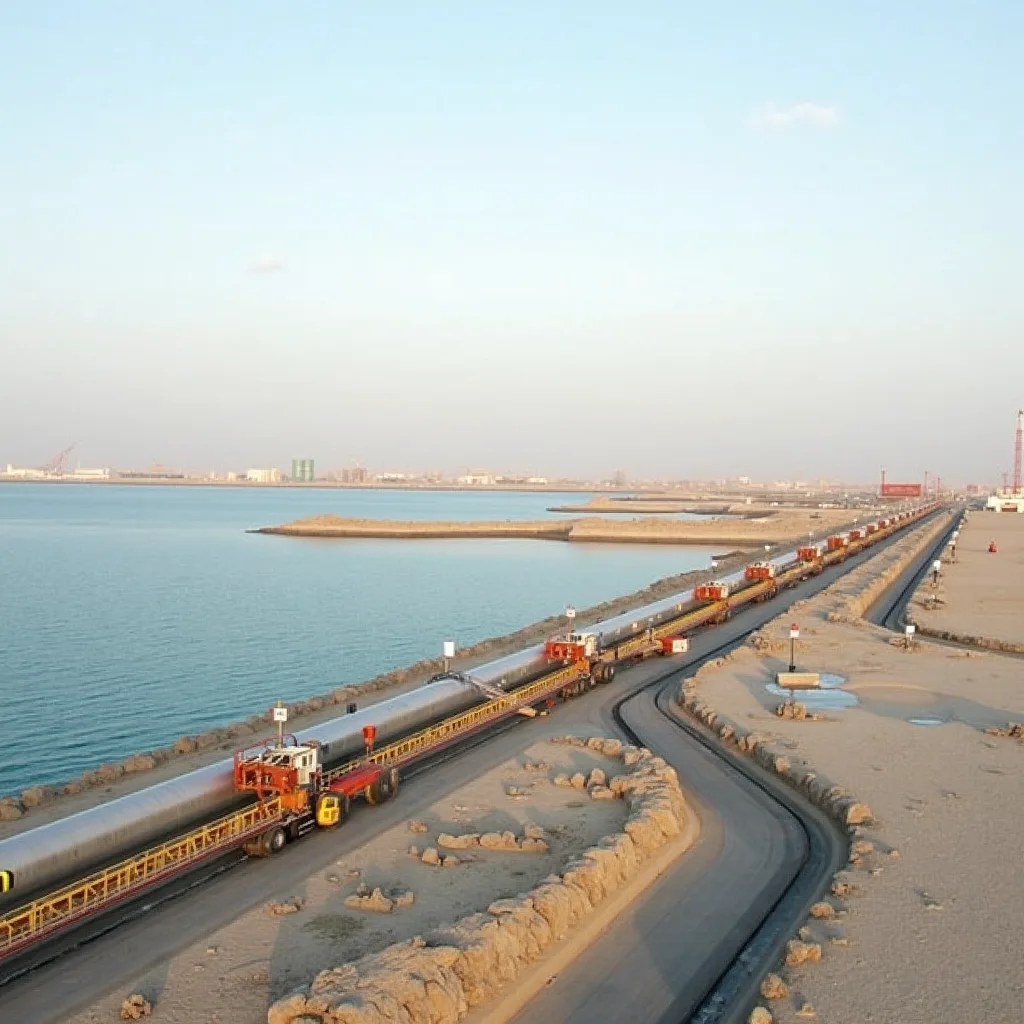
UAE State Oil Company Head Says Hormuz Bypass Pipeline Nearly 50 Percent Complete
What the Documents Show
The project represents more than infrastructure investment—it signals that one of the world's largest oil exporters no longer believes in the security of the current system. "Right now, too much of the world's energy still moves through too few choke points," Al Jaber said at the Atlantic Council. "That is exactly why the UAE made the decision more than a decade ago to invest in infrastructure that bypasses the Strait of Hormuz." The timing is not coincidental. The Strait of Hormuz, through which roughly 20 percent of global crude oil passes daily, has been destabilized for months by escalating Iranian-Israeli tensions and US military interventions. The UAE's announcement to accelerate construction came explicitly following weeks of direct conflict—a move that speaks to how immediate and credible leadership in Abu Dhabi assesses the risk of supply disruption.
Follow the Money
The existing Habshan-Fujairah pipeline already allows the Emirates partial bypass capacity; the new project will dramatically expand it. What makes this significant is not the engineering but the political message it encodes. The UAE, a US-aligned Gulf monarchy and a pillar of the Abraham Accords framework, is hedging against American inability to guarantee Strait security. Washington has maintained a naval presence in the Persian Gulf for 40 years based largely on an implicit bargain: we protect your oil lanes; you price oil in dollars and keep production flowing to the West. The acceleration of UAE's bypass pipeline—a project initiated over a decade ago but now urgently fast-tracked—is a quiet repudiation of that bargain's reliability. Al Jaber's framing about "energy security" masks a harder truth: energy geopolitics is no longer about production capacity.
What Else We Know
It's about freedom of movement. Iran's asymmetric capabilities—naval mines, drones, missile swarms—have made the Strait a genuine chokepoint vulnerability rather than a mere theoretical risk. Israel's strikes deep into Iranian territory and Iran's retaliatory posture have created the conditions where infrastructure, not diplomacy, becomes the only insurance policy a state can purchase. This pipeline also repositions the UAE within regional power dynamics. By securing alternative export routes independent of the Strait, Abu Dhabi reduces its leverage to Iran while simultaneously reducing Iran's leverage over it. This is particularly meaningful given the Gulf's complex sectarian and geopolitical fissures, where energy interdependence has historically constrained aggressive behavior.

The official energy narrative focuses on production and reserves; this story reveals that the real competition is now over *logistics*. What strikes me about Al Jaber's announcement is how it exposes an unstated assumption in American foreign policy: that military presence and dollar denomination are sufficient to ensure structural advantage. They're not anymore.
The pattern here is clear: when regional powers lose confidence in a hegemon's ability to stabilize chokepoints, they stop relying on the hegemon's protection and start building around it. The UAE is not rebelling against the US; it's simply accepting that American guarantees now carry explicit risk premiums that infrastructure investment can reduce. That's a rational response to recent history—months of proxy warfare in the Strait that Washington has proven unable to prevent.
Who benefits from keeping the Hormuz narrative focused on "tensions" rather than "vulnerability"? The Pentagon, which justifies the 5th Fleet's $10 billion annual operating cost through threat inflation. The oil majors, whose refining infrastructure remains optimized around existing supply routes. OPEC, which maintains leverage through scarcity.
What readers should understand: every day this pipeline gets closer to completion is a day the petrodollar system becomes structurally weaker. Watch whether Saudi Arabia announces its own bypass project. That announcement will signal the true fracture in American Middle East dominance—not through rhetoric or alliance-switching, but through concrete infrastructure that makes US military presence strategically optional rather than operationally essential.
Primary Sources
- Source: ZeroHedge
- Category: Global Power
- Cross-reference independently — don't take our word for it.
Disclosure: NewsAnarchist aggregates from public records, API feeds (Federal Register, CourtListener, MuckRock, Hacker News), and independent media. AI-assisted synthesis. Always verify primary sources linked above.
This article is produced by NewsAnarchist's AI reporting system, not a human staff reporter. It's built from the primary source cited above (an official government or diplomatic statement, wire-service reporting (Reuters, AP, AFP) we cite by name, or a named think-tank/NGO report) and reports what that source states, attributed to it — it reports what that source states and does not predict how a conflict or negotiation resolves. Part of our Global Power hub. Found an error? Tell us.