NATO Warns Russia's Hybrid War Is Targeting Europe's Energy Grid

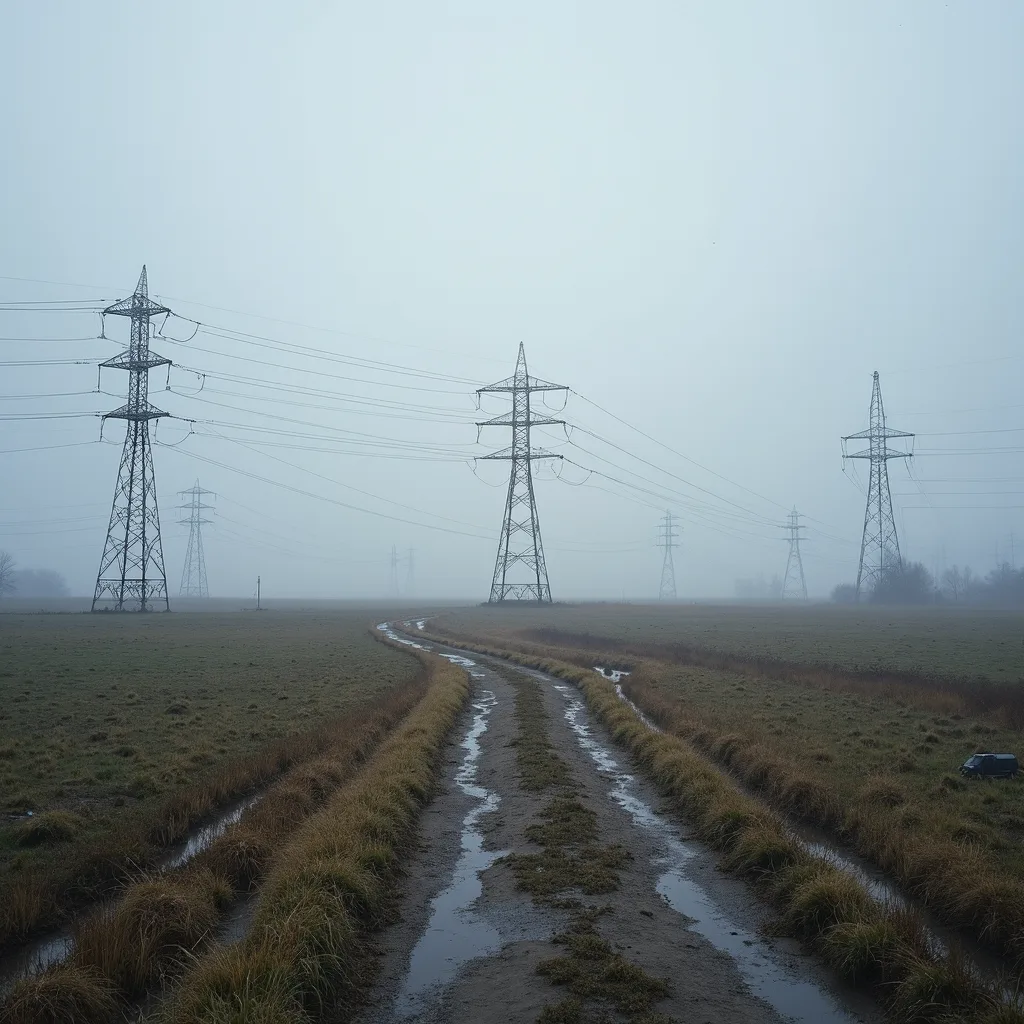
What they're not telling you: Europe's Energy Grid Is Now the Battlefield—and NATO's Admission Reveals How Unprepared It Is NATO officials are now openly acknowledging what their operational planning has assumed for months: Russia is systematically targeting Europe's energy infrastructure as a deliberate military strategy, and the alliance lacks credible deterrence to stop it. The admission came last week from a senior European Union energy security official who works directly within the bloc's operational planning structure. Speaking to OilPrice.com, this source laid bare the calculus driving Moscow's escalation: with the Ukraine war grinding into a prolonged attrition phase that strains Russian military and economic capacity, Putin's strategy is shifting toward "grey war"—attacks calibrated to inflict maximum economic damage on NATO members without triggering the kind of unified military response that a direct conventional attack might provoke.
What the Documents Show
The targets are explicit: gas pipelines, electricity interconnectors, offshore networks, and subsea control systems. Russian-linked vessels have been conducting surveillance operations in the Baltic and North Seas. Recent incidents confirm Moscow has moved from reconnaissance to active probing of European vulnerabilities. The historical pattern here is unmistakable, and NATO's own officials are connecting the dots publicly now. The timeline runs from Putin's 2007 Munich speech denouncing NATO expansion, through Estonia's 2007 cyberattacks, Georgia in 2008, Crimea in 2014, and now the full-scale Ukraine invasion of 2022.
Follow the Money
Each escalation tested Western resolve. Each time, according to the EU source, the West responded with insufficient consequences—which only signaled to Moscow that further boundary-pushing remained within acceptable risk parameters. Russia has already deployed the full arsenal of hybrid warfare in Ukraine: cyberattacks on control systems, physical sabotage of critical infrastructure, coordinated strikes on civilian energy networks. Those capabilities are now operationally ready for deployment against NATO territory. What makes this moment different is that Moscow appears to be probing for the threshold of Western response. The EU source states it plainly: Russia will continue escalating "until Putin thinks we'll react with true deterrent force." This is not paranoia or worst-case modeling.
What Else We Know
This is the assessment of officials embedded in European security apparatus who have direct access to incident reports, surveillance data, and Russian operational patterns. They are describing a slow-motion game of brinkmanship where each attack tests whether NATO will finally establish a credible cost structure for aggression—or whether the alliance will continue absorbing punishment with diplomatic protests and sanctions that Moscow has already priced into its strategic calculations. The energy infrastructure angle also exposes a critical vulnerability in NATO's collective defense posture. Energy security is not uniformly distributed across the alliance. Baltic states, Poland, and parts of Central Europe remain partially dependent on Russian gas flows and are geographically proximate to Russian territory. A coordinated attack on subsea cables, offshore platforms, or interconnector systems could fragment European power distribution and create cascading economic damage—potentially worse than isolated military strikes because the effects would be economic rather than kinetic, making proportional response politically harder to justify.

What strikes me most sharply is that NATO is now admitting in semi-public channels what it should have operationalized years ago: that Russia has been at war with the West not since February 2022, but since 2007, and that the West's response has consistently lagged the threat. The pattern of institutional failure here is worth naming: deterrence works only when the adversary believes you will pay a cost you've made credible in advance. Instead, NATO has responded to each Russian escalation with reactions that come after the fact—sanctions after invasion, rhetoric after sabotage. This positions the alliance perpetually on its back foot.
The beneficiary of the current narrative, which treats Russian hybrid attacks as escalating incidents rather than as the inevitable continuation of a 17-year campaign, is anyone invested in maintaining the status quo: energy companies profiting from infrastructure rebuilding contracts, defense contractors gaining budget allocation for new capabilities, and most cynically, the alliance's political leadership avoiding the politically difficult conversation about what actual deterrence requires—forward military deployments, explicit red lines, and the willingness to impose costs that make further escalation irrational from Moscow's perspective.
Watch for whether European governments actually begin hardening their energy infrastructure with redundancy and dispersal, or whether they continue patching systems after attacks. That distinction tells you everything about whether NATO has moved from diagnosis to strategy.
Primary Sources
- Source: ZeroHedge
- Category: Global Power
- Cross-reference independently — don't take our word for it.
Disclosure: NewsAnarchist aggregates from public records, API feeds (Federal Register, CourtListener, MuckRock, Hacker News), and independent media. AI-assisted synthesis. Always verify primary sources linked above.