India Rescues 24 Crewmembers From Stricken Tanker Off Oman After US Airstrike

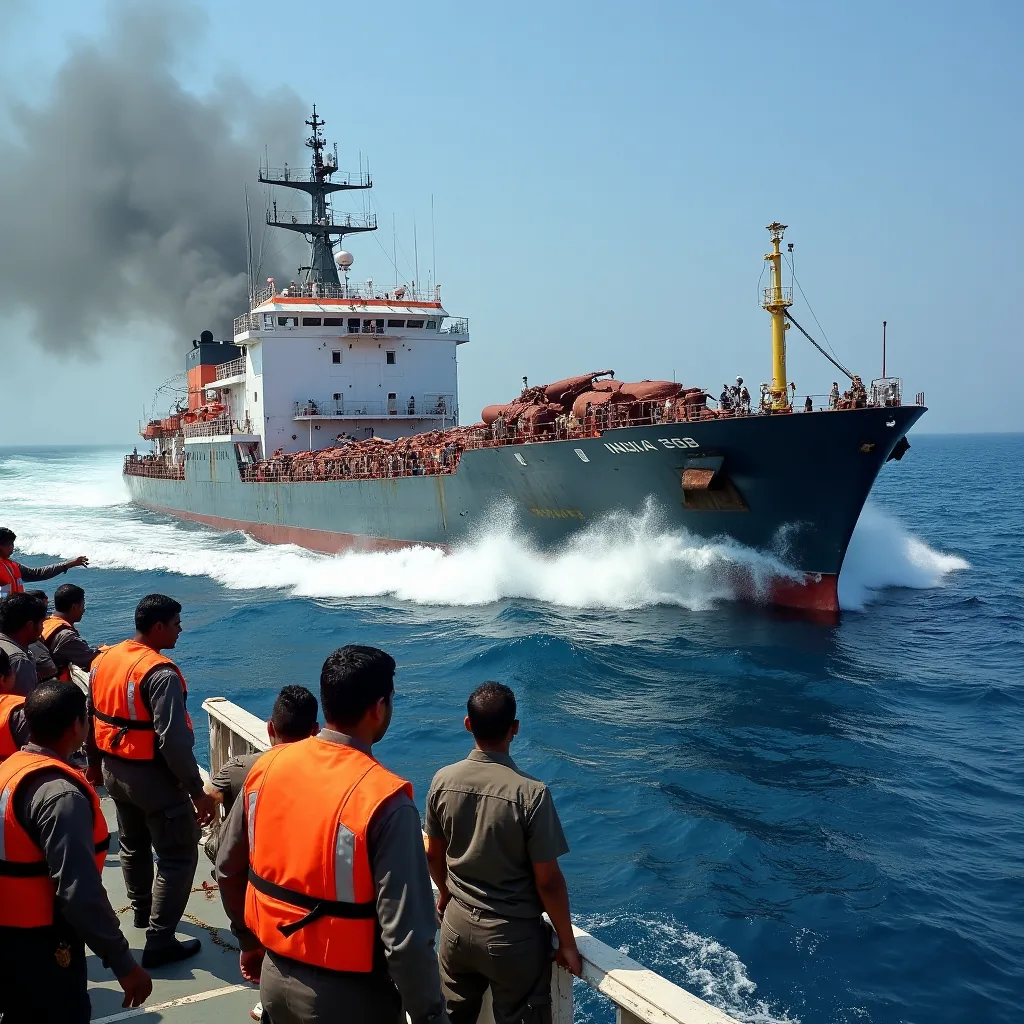
What they're not telling you: US Military Disabled Tanker Heading to Iran; 24 Sailors Rescued After Fire The United States Navy deliberately struck and disabled a commercial tanker in international waters because it refused to comply with an undeclared American blockade of Iranian ports, according to CENTCOM's own statement—a fact buried beneath rescue narratives that obscure the military action that preceded the emergency. On Monday, an F/A-18 Super Hornet launched from USS Abraham Lincoln fired a precision munition directly into the engineering and steering spaces of MT Marivex, a Palau-flagged tanker carrying 24 Indian seafarers. CENTCOM's statement was explicit: the vessel "refused to respond to orders" from US forces and "attempted to sail to an Iranian port, in violation of the ongoing blockade." The strike occurred in the Gulf of Oman, where international maritime law permits free passage.
What the Documents Show
The blockade itself—initiated April 13 according to Pentagon records—has never been formally announced by Congress or codified in international agreement. It exists as operational fact without legislative authorization. What followed the strike was a fire of undetermined origin in the tanker's bridge and accommodation cabins. Indian Navy helicopters responded swiftly, winching all 24 crew members to safety in a rescue operation that dominated the news cycle. The Times and Reuters led with the humanitarian outcome: sailors saved, professionalism praised.
Follow the Money
The Forward Seamen's Union of India released images of crew members suspended in baskets above black smoke. India's Ministry of Ports, Shipping and Waterways, through director Opesh Kumar Sharma, confirmed all seafarers were safe. This sequence inverted the actual causal chain. The fire occurred after the US military damaged the vessel's propulsion and steering systems. The rescue—necessary and competent though it was—became the story, while the preceding military action that disabled a civilian merchant ship became context. News outlets reported the strike as established fact but framed the rescue as the primary event, allowing the extraordinary act of interdicting commercial shipping in international waters to recede into technical detail.
What Else We Know
The incident occurred amid broader instability. Brent crude spiked 5 percent to $97.83 per barrel on the news, while WTI held near $95. Energy markets immediately priced in renewed disruption to the world's most critical shipping lane. The report mentions Houthis and Iran-Israel tensions in passing—suggesting multiple actors are disrupting Gulf commerce—but the US military action against a single merchant vessel transiting toward Iran received far less scrutiny than the oil market reaction it triggered. No statement has addressed why an Indian-crewed tanker bound for Iran constituted a sufficient threat to justify a precision strike on its engineering compartment. No explanation clarifies which international authority authorized the April 13 blockade.
Primary Sources
- Source: ZeroHedge
- Category: Conflict & Wars
- Cross-reference independently — don't take our word for it.
Disclosure: NewsAnarchist aggregates from public records, API feeds (Federal Register, CourtListener, MuckRock, Hacker News), and independent media. AI-assisted synthesis. Always verify primary sources linked above.