Trump Admin Announces $850MM To Modernize US Coal Capacity, Build 2 New Plants

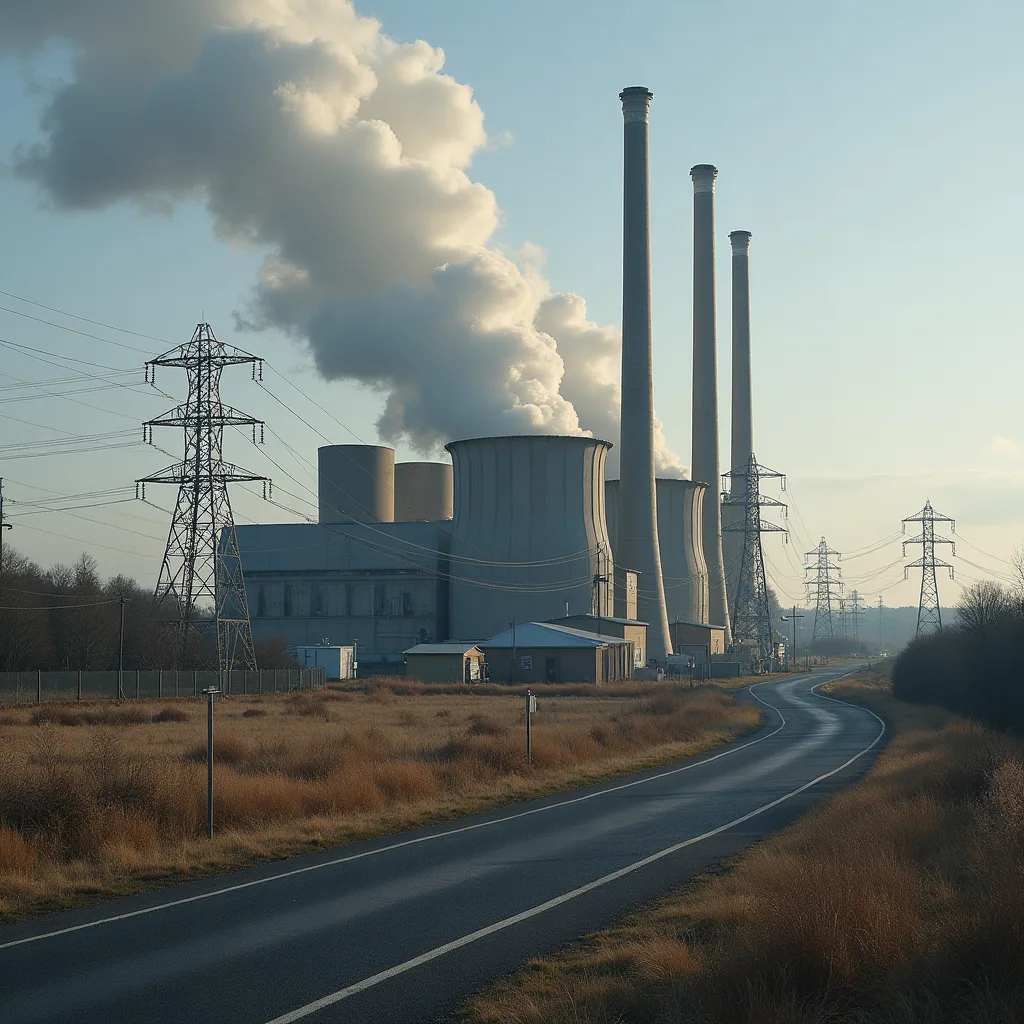
What they're not telling you: The Pentagon's Fossil Fuel Backdoor: How Trump Administration Weaponized Emergency Powers to Rescue Coal The Trump administration is using wartime emergency authorities meant for critical national defense to funnel $850 million into coal infrastructure that cannot compete in any functioning market. The mechanism is explicit and unusual: Kyle Haustveit, Under Secretary of Energy, announced that the Department of Energy will deploy up to $425 million in Defense Production Act Title III funds—authorities Congress granted specifically to mobilize resources during national emergencies—to support twelve coal-plant projects. An additional $75 million goes to the West Gateway Terminal Project, a rail-served marine export facility.
What the Documents Show
A separate $350 million initiative called "Restoring Reliability: Coal Recommissioning and Modernization" aims to preserve roughly 3.6 gigawatts of coal-fired generating capacity at sites including the Apache Generating Station near Cochise, Arizona. This represents a deliberate classification decision: treating coal as essential to national security and supply chain resilience. The language Haustveit deployed in the official statement mirrors Cold War resource doctrine. He framed the West Gateway Terminal as necessary to "support continued growth in U.S. coal exports, improve supply chain resilience, and strengthen energy partnerships with allies throughout the Indo-Pacific region." The framing transforms a domestic subsidy into a geopolitical tool.
Follow the Money
Yet nothing in the source material establishes that coal-fired power generation addresses any actual defense vulnerability. The Defense Production Act Title III authority exists to accelerate production of materials truly critical to military operations—semiconductors, rare earth elements, medical supplies—not to prop up power generation technology that has lost competitive position across the American grid. The administration's public claims about coal's affordability cannot withstand scrutiny against its own actions. Trump stated that coal prevented "17 GW of coal-powered electricity from going offline" at "the lowest price." Yet if coal were genuinely the lowest-cost power source, neither the Defense Production Act redirect nor the direct subsidies would be necessary. The fact that the government must forcibly prevent coal plants from retiring—and must spend $850 million to keep them operating—proves the opposite of what Trump claims. The market has already made its decision.
What Else We Know
Industry analysts Jenkins and Slocum, cited in the source material, identified the core contradiction: this spending makes "most Americans poorer" by sustaining an "outdated, expensive and dirty fossil fuel" that cannot compete in free markets. They correctly identified this as a "misuse of the Defense Production Act." What the mainstream reporting tends to understate is that this approach abandons any pretense of market economics. The administration is not merely subsidizing an industry—it is commandeering emergency national security apparatus to override market signals. The choice to use Title III authority specifically signals that conventional budget appropriations alone are politically insufficient. Emergency powers allow the administration to bypass normal congressional scrutiny and bypass standard cost-benefit analysis required of regular spending. --- THE TAKE --- This is the clearest evidence yet that industrial policy in this administration functions as pure patronage dressed in national security language, and it reveals something more damaging: the normalization of emergency authorities for non-emergency purposes.
Primary Sources
- Source: ZeroHedge
- Category: Conflict & Wars
- Cross-reference independently — don't take our word for it.
Disclosure: NewsAnarchist aggregates from public records, API feeds (Federal Register, CourtListener, MuckRock, Hacker News), and independent media. AI-assisted synthesis. Always verify primary sources linked above.