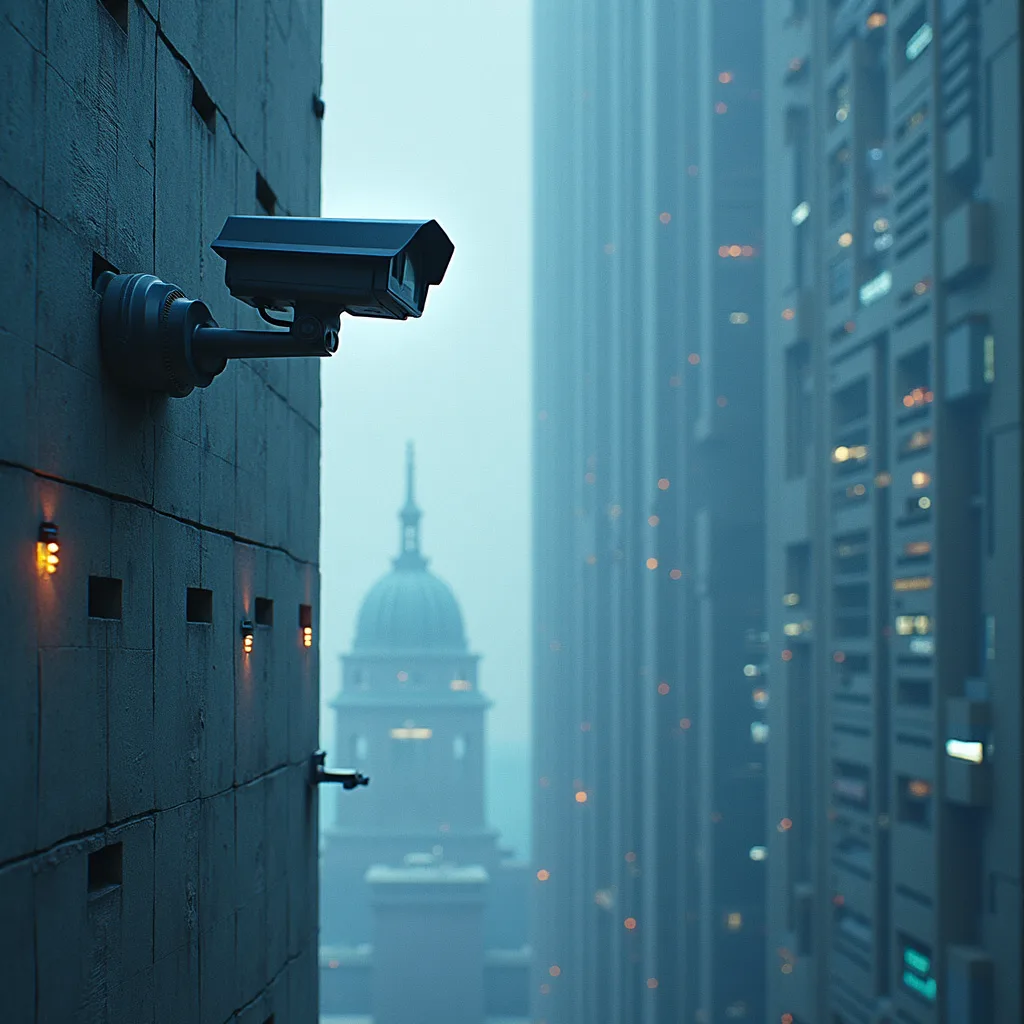
What they're not telling you: # Mass Surveillance Operates Without Warrants Through Bulk Collection Programs That Target Communications Infrastructure Rather Than Individual Suspects The 2013 Edward Snowden revelations exposed a foundational truth that mainstream media has largely moved past: Western governments constructed surveillance systems designed to capture everything first and filter later, bypassing traditional warrant requirements entirely. According to privacy community discussions, the infrastructure for this indiscriminate monitoring operates at hardware and network levels—intercepting social media traffic and embedding backdoors directly into equipment—rather than through targeted investigations of specific individuals. What separates this from conventional law enforcement surveillance is the inversion of the legal model.

# THE TAKE: We Didn't Forget Snowden. We Accepted Him. The 2013 revelations didn't spark reform—they normalized surveillance. That's the bitter arithmetic nobody wants to audit. NSA bulk collection programs? Technically rebranded, operationally continuous. The FISA courts? Still rubber-stamping warrants at 99.97% approval rates. Snowden exposed the machinery; we collectively shrugged, and the machinery got better. The 2020s difference: surveillance is now *decentralized and profitable*. Your phone doesn't need NSA intercepts when TikTok's algorithm does the behavioral mapping for free. Meta monetizes your patterns. Palantir commercialized fusion analysis. The surveillance state won because Snowden was a symptom, not a cause. He revealed infrastructure; he couldn't stop the economic incentives feeding it. We didn't forget Snowden. We outsourced our concern.
What the Documents Show
Traditional warrants require probable cause before monitoring a suspect. The post-Snowden surveillance state inverts this: it monitors everyone, then justifies the practice through retroactive legal frameworks and classification. The Snowden materials demonstrated that telecom companies and internet infrastructure providers became extensions of intelligence agencies, with traffic flowing through government monitoring points before reaching users. This happened not through dramatic raids or secret courts, but through routine government contracts and national security letters—mechanisms that operate in legal gray zones with minimal public accountability. The mainstream narrative has largely absorbed this into normalcy.
Follow the Money
News coverage shifted from "this is happening" to "how do we balance security and privacy?"—a framing that accepts surveillance's existence as inevitable. Meanwhile, the infrastructure has only deepened. Privacy advocates note that a decade of post-Snowden reporting has produced minimal legislative change in the United States, despite public outcry. No major surveillance programs were permanently shuttered. No executives faced prosecution. The legal authorities used to justify bulk collection remain in place, continually renewed and expanded through classified interpretations of the Foreign Intelligence Surveillance Act.
What Else We Know
The community perspective underscores what gets minimized in mainstream coverage: the totality of the infrastructure. It's not just government agencies acting alone. Hardware-level backdoors mean that devices are compromised before reaching consumers. Social media interception means that private communications are collected as standard procedure. What Snowden called "active social conditioning"—the deliberate use of surveillance data to shape information environments—represents a layer beyond mere monitoring: it's weaponized collection feeding into influence operations. For ordinary people, the practical implications extend beyond privacy erosion.
Primary Sources
- Source: r/privacy
- Category: Surveillance State
- Cross-reference independently — don't take our word for it.
Disclosure: NewsAnarchist aggregates from public records, API feeds (Federal Register, CourtListener, MuckRock, Hacker News), and independent media. AI-assisted synthesis. Always verify primary sources linked above.