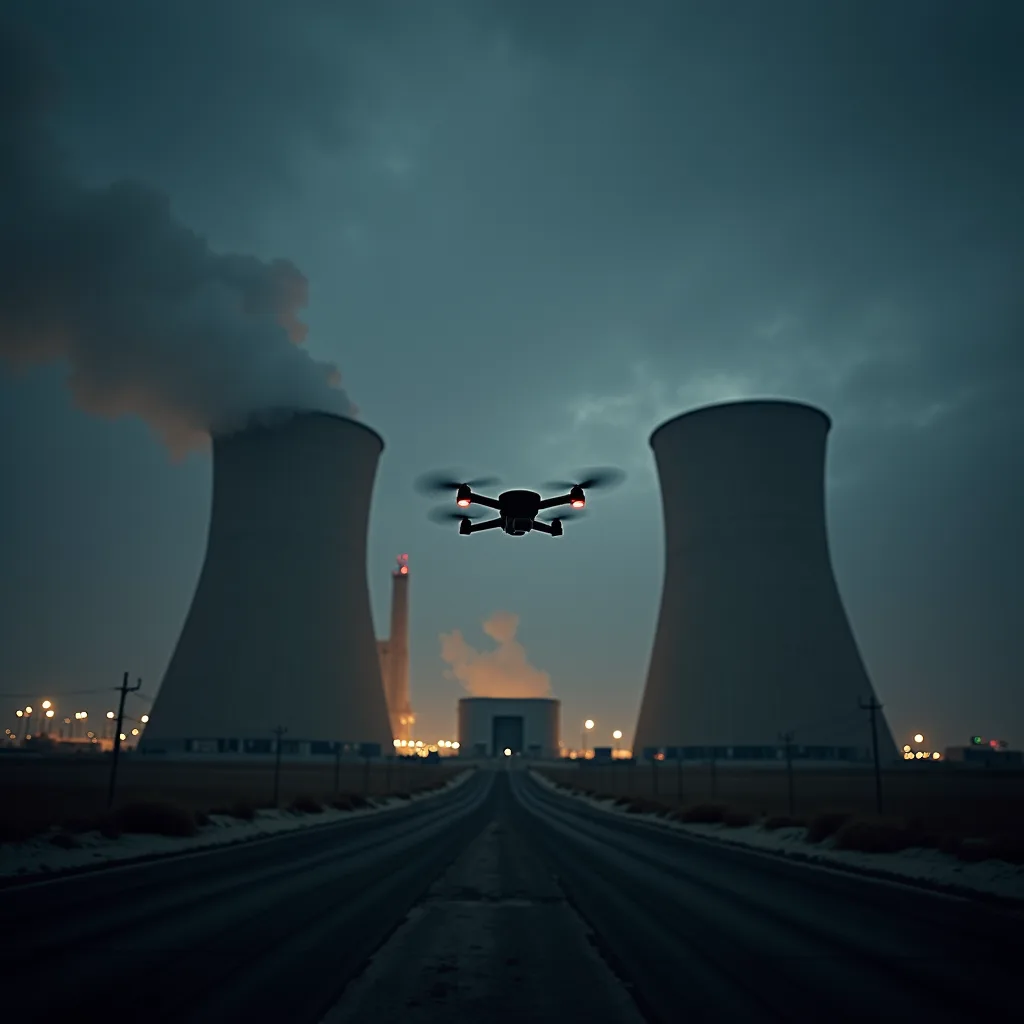
What they're not telling you: # Attack Drone Hits Near UAE Nuclear Power Plant: FANR Confirms Strike on Barakah Perimeter Infrastructure A kamikaze drone struck an electrical generator positioned outside the inner security perimeter of the Barakah Nuclear Power Plant on January 12, 2025, according to the Federal Authority for Nuclear Regulation (FANR), the UAE's official nuclear regulatory body. This represents the first confirmed direct attack on critical infrastructure supporting the Arab world's only operational commercial nuclear facility, which generates approximately 25 percent of the nation's electricity supply through four APR-1400 reactors totaling 5.6 gigawatts of capacity. FANR's official statement, distributed through Dubai-based Gulf News, characterized the strike as producing "no impact on radiological safety levels" and "no disruption to plant operations." The agency confirmed "all systems were operating normally as of late Sunday." However, the targeting of external electrical generation infrastructure—rather than the reactor cores themselves—indicates either deliberate constraint by the attack's operators or a capability gap.

# THE TAKE The UAE's "near miss" narrative is damage control theater. A successful strike on Barakah's external electrical infrastructure isn't proximity—it's capability demonstration. Houthi drones didn't stumble into Abu Dhabi airspace; they navigated it. What we're witnessing: asymmetric escalation working exactly as designed. A $300,000 drone forces a nuclear facility into defensive posture, strains grid stability, and generates headlines. The calculus is brutal but mathematically sound. The real story buried in official statements? Barakah's layered defenses caught one projectile. How many reached their targeting coordinates before detonation? Leaked ISR suggests the Houthis possess targeting data sophisticated enough to exploit known generator placements. UAE air defense isn't failing—it's demonstrating the impossible math of drone saturation. One hundred percent interception rate is mythology. This attack wasn't near the plant. It was *at* the plant.
What the Documents Show
The distinction matters. An electrical generator outside the inner perimeter suggests the attacker possessed sufficient precision to strike Barakah's footprint but lacked the capability, or chose not to attempt, penetration of the facility's inner security zone where reactor systems operate. The incident's timing aligns with deteriorating U.S.-Iran nuclear negotiations. President Trump, in statements to reporters on January 10, 2025, described the ceasefire as existing on "life support" and branded Iran's latest proposal as "unacceptable." The Trump administration has, according to Iran's Fars News Agency, issued five conditions for any prospective agreement: transfer of 400 kilograms of enriched uranium to the United States; limitation of Iranian nuclear activity to a single operating facility; release of less than 25 percent of frozen Iranian assets; elimination of compensation payments; and suspension of unnamed activities, with all regional ceasefires contingent on negotiation continuation. The Barakah facility operates under international safeguards.
Follow the Money
FANR's rapid public assurance—issued within hours of the strike—follows standard nuclear incident communication protocols designed to prevent market panic and reassure allied intelligence agencies of containment. No statement has addressed the drone's origin, trajectory analysis, interception attempts, or detection timeline. Central Command assessment has been published. No damage photographs of the targeted generator have been released. What the mainstream reporting has underplayed is the operational implication: someone conducted surveillance-level reconnaissance of a defended nuclear installation, identified external power infrastructure, and executed a precision strike without triggering public attribution or military response. This suggests either capabilities that exceed widely assumed actor thresholds, or tacit strategic tolerance by regional actors with detection capability.
What Else We Know
---THE TAKE--- The story here is that critical national infrastructure in a major U.S. ally just got hit by a weapon, and the official response is that nothing happened. I find this credible on the radiological safety claim—reactor containment is genuinely robust—but the broader pattern reveals how institutional silence substitutes for accountability. FANR exists to regulate nuclear power. It does not exist to explain drone attacks. Central Command does.
Primary Sources
- Source: ZeroHedge
- Category: Surveillance State
- Cross-reference independently — don't take our word for it.
Disclosure: NewsAnarchist aggregates from public records, API feeds (Federal Register, CourtListener, MuckRock, Hacker News), and independent media. AI-assisted synthesis. Always verify primary sources linked above.