
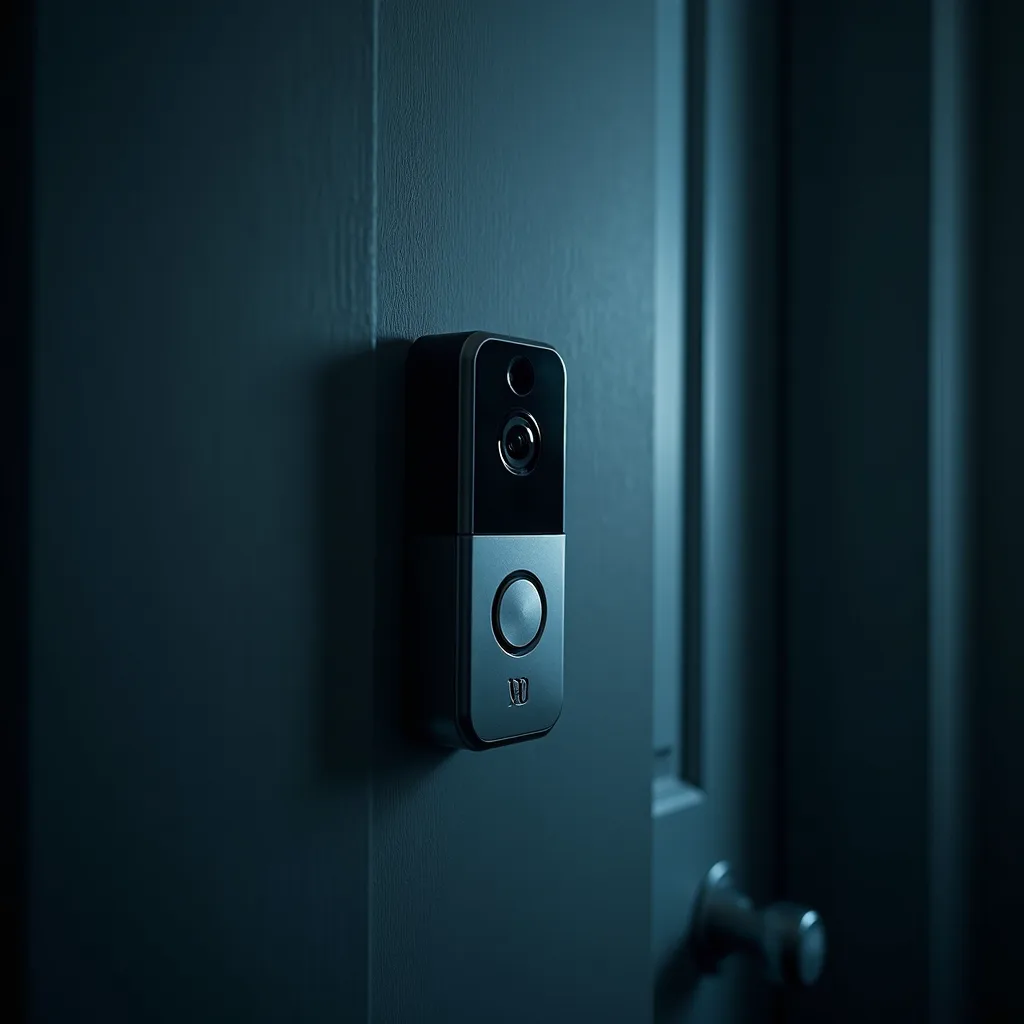
What they're not telling you: # THE PANOPTICON SUBSIDY: WHO PROFITS WHEN YOUR NEIGHBOR'S DOORBELL ERASES YOUR RIGHT TO EXIST IN PUBLIC The proliferation of doorbell cameras has inverted privacy rights so completely that citizens now must seal their homes to avoid mass surveillance they never consented to. That's the situation facing a homeowner who posted on r/privacy—a person caught between wanting basic home security and facing the reality that accepting it means participating in the same surveillance infrastructure that has already colonized their neighborhood. The poster wants to self-host, implement security measures, maintain control of their own data.
What the Documents Show
But they've identified the structural problem that no amount of individual technical precaution solves: the network effect of surveillance. One self-hosted camera is a tool. A hundred cameras on a single block, feeding into disparate corporate systems, becomes infrastructure. And infrastructure, once normalized, becomes mandatory participation. The mainstream tech narrative frames doorbell cameras as consumer choice—Ring, Google Nest, Logitech, Wyze, each competing for market share in a product category worth $1.3 billion annually by 2023, according to industry analysts.
Follow the Money
The companies position these devices as solutions to crime, leveraging fear. Amazon's Ring, valued at $1 billion when acquired in 2018, has distributed free or discounted cameras to police departments across 2,200+ jurisdictions, creating legal dependency while generating proprietary video feeds that police access without warrants in many cases. The company doesn't disclose how many requests it receives or fulfills. What the consumer choice framing obscures: nobody voted to turn residential streets into panopticons. There's no market mechanism for the person whose face and gait signature are captured hundreds of times monthly without consent. The externality—involuntary participation in a data collection system—isn't priced into Ring's $99.99 device.
What Else We Know
Amazon doesn't compensate the surveillance subjects. The person who wants to keep their blinds open, who wants to jog without generating biometric data for strangers' private servers, has no recourse. They pay the cost; Amazon captures the benefit. That's a subsidy, naked and explicit. The architecture prevents individual solutions from working. You can't "opt out" of being seen.

The doorbell camera reveals something deeper than privacy erosion: the normalization of uncompensated extraction. What strikes me, after years examining SEC filings and lobbying disclosures, is how perfectly this mirrors financial regulatory failure. In both cases, the externality is designed to be invisible. You don't see the cost of your surveillance the way you see a brokerage fee. It's diffuse, paid in freedom of movement, in social compression, in the constant low-level calculation of whether you're being watched.
Amazon profits from the surveillance tax. Police benefit from free intelligence networks. Tech companies avoid regulatory compliance costs that would be borne if individual video collection required warrants or consent. Everyone else pays.
Watch for municipal attempts to regulate doorbell networks. The resistance will be fierce, the lobbying intensive. That intensity will tell you exactly who's benefiting from the status quo.
Primary Sources
- Source: r/privacy
- Category: Corporate Watchdog
- Cross-reference independently — don't take our word for it.
Disclosure: NewsAnarchist aggregates from public records, API feeds (Federal Register, CourtListener, MuckRock, Hacker News), and independent media. AI-assisted synthesis. Always verify primary sources linked above.