
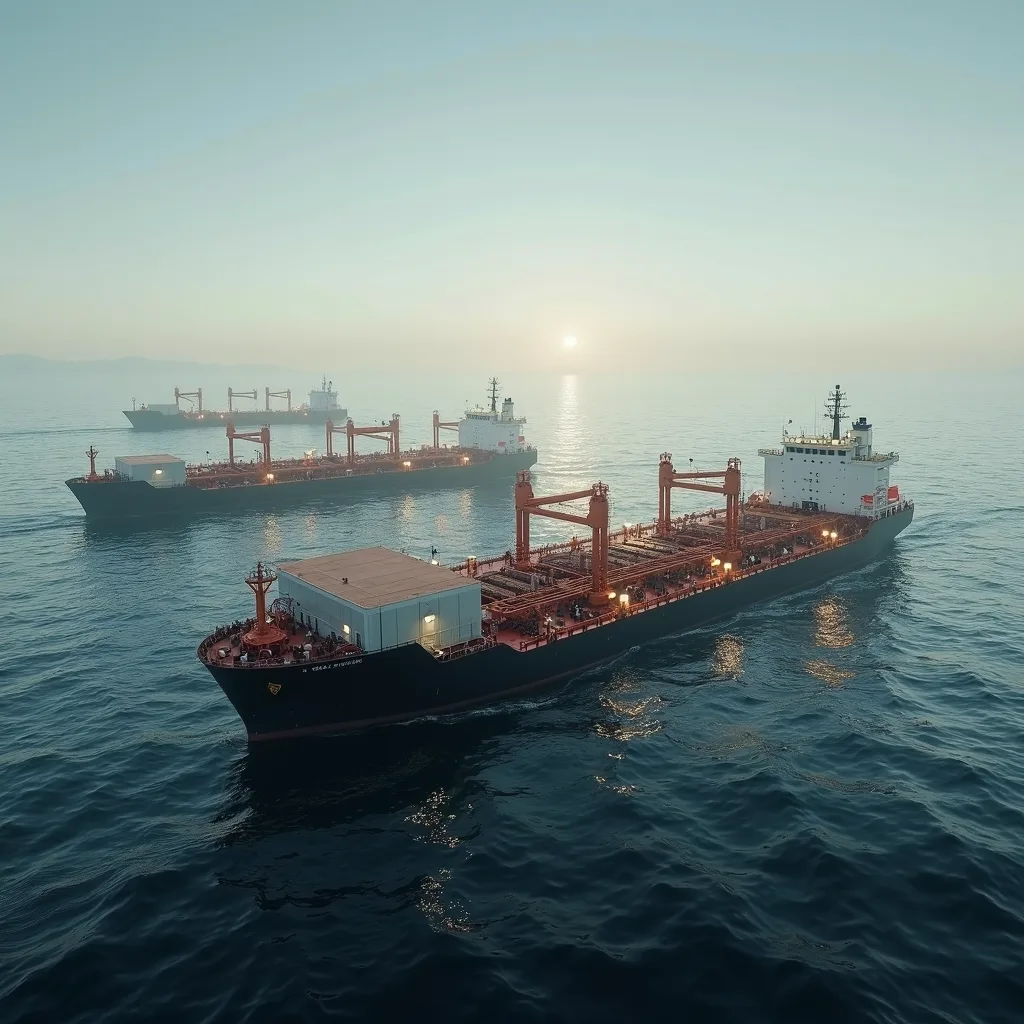
What they're not telling you: # Iran's Floating Oil Stockpile Jumps 65% As U.S. Naval Blockade Bites Iran now has 42 million barrels of crude sitting idle on tankers in the Persian Gulf—a 65% surge since April—because the United States Navy has successfully bottled up Tehran's oil exports in what amounts to an undeclared blockade dressed up as maximum pressure. The numbers tell a story the White House messaging apparatus hasn't fully articulated: the American naval posture initiated mid-April isn't just tightening Tehran's economic noose, it's creating a visible, quantifiable crisis that strips away diplomatic cover.
What the Documents Show
Data from the U.S.-based watchdog United Against Nuclear Iran (UANI) shows the tanker count in the Gulf loaded with Iranian crude and petrochemicals has spiked from 29 vessels to 49 since April 13—a 69% jump in just weeks. Satellite imagery confirms what shipping analysts have long known: these aren't merchant vessels awaiting normal market conditions. They're floating storage depots, growing fuller by the day, because Kharg Island—Iran's primary export terminal—has essentially gone dark. The blockade is working, which means the blockade is visible, which means it requires justification. Washington's official framing emphasizes the "maximum pressure" doctrine: squeeze Iran's hydrocarbon sector until it capitulates on nuclear negotiations.
Follow the Money
But what the Pentagon and State Department speeches elide is the elementary fact that this is a naval embargo, imposed without Security Council authorization, enforced by the Fifth Fleet, with the explicit intention of coercing a sovereign state's negotiating position. The British government, traditionally aligned with U.S. Gulf strategy, hasn't echoed Washington's language with its usual fervor—a tell. Iran's response reveals the tactical sophistication often missing from Western analysis. Rather than attempt the suicidal gambit of breaking through the blockade, Tehran has shifted to what maritime analysts call "clustering"—concentrating idle tankers near Chabahar, the southern port technically outside Strait of Hormuz but still within interception range. It's a staging operation.
What Else We Know
Iran is banking on one of two contingencies: either the blockade eventually fractures under Chinese or Russian diplomatic pressure, or Tehran can leverage the floating inventory as physical leverage in future negotiations. Forty-two million barrels represents negotiating capital that cannot be seized or frozen once it's already loaded. What's conspicuously absent from mainstream coverage is the precedent. imposed similar oil export restrictions on Japan in 1941—cutting off 80% of Japanese crude supplies—as a pressure tactic before Pearl Harbor. It imposed sanctions-based restrictions on Iraqi oil under Clinton throughout the 1990s. It has maintained a de facto naval embargo on Venezuelan oil for three years.

What I find striking is that the Biden administration has normalized blockade operations so thoroughly that most American outlets now simply report the tactical effectiveness as neutral reporting rather than as what it is: a deliberate policy choice to strangle another nation's economy without authorization from any international body.
The pattern here is institutional. The Pentagon has developed operational capacity to enforce resource denial that exceeds what Congress explicitly authorized. UANI, a think tank with zero public accountability, is being cited as the primary source for what amounts to military intelligence collection. And the corporate media reports these numbers as though they're weather data rather than evidence of economic coercion. Meanwhile, China and Russia watch America's demonstrated willingness to weaponize control of the Strait of Hormuz and draw the obvious lesson: diversify energy sources and challenge U.S. maritime dominance before that stranglehold tightens around you.
The official narrative presents this as pressure tactics in service of nuclear negotiations. What actually happened is the United States demonstrated it will blockade state actors to force compliance—establishing precedent that every competitor nation will use to justify their own resource control strategies.
Watch whether Germany or Japan formally objects to this blockade in public statements. If they don't, we'll know the entire alliance structure has shifted.
Primary Sources
- Source: ZeroHedge
- Category: Global Power
- Cross-reference independently — don't take our word for it.
Disclosure: NewsAnarchist aggregates from public records, API feeds (Federal Register, CourtListener, MuckRock, Hacker News), and independent media. AI-assisted synthesis. Always verify primary sources linked above.