Rubio Says 'We Remember Their Lives And Honor Their Legacy' On Tiananmen Massacre's 37th Anniversary

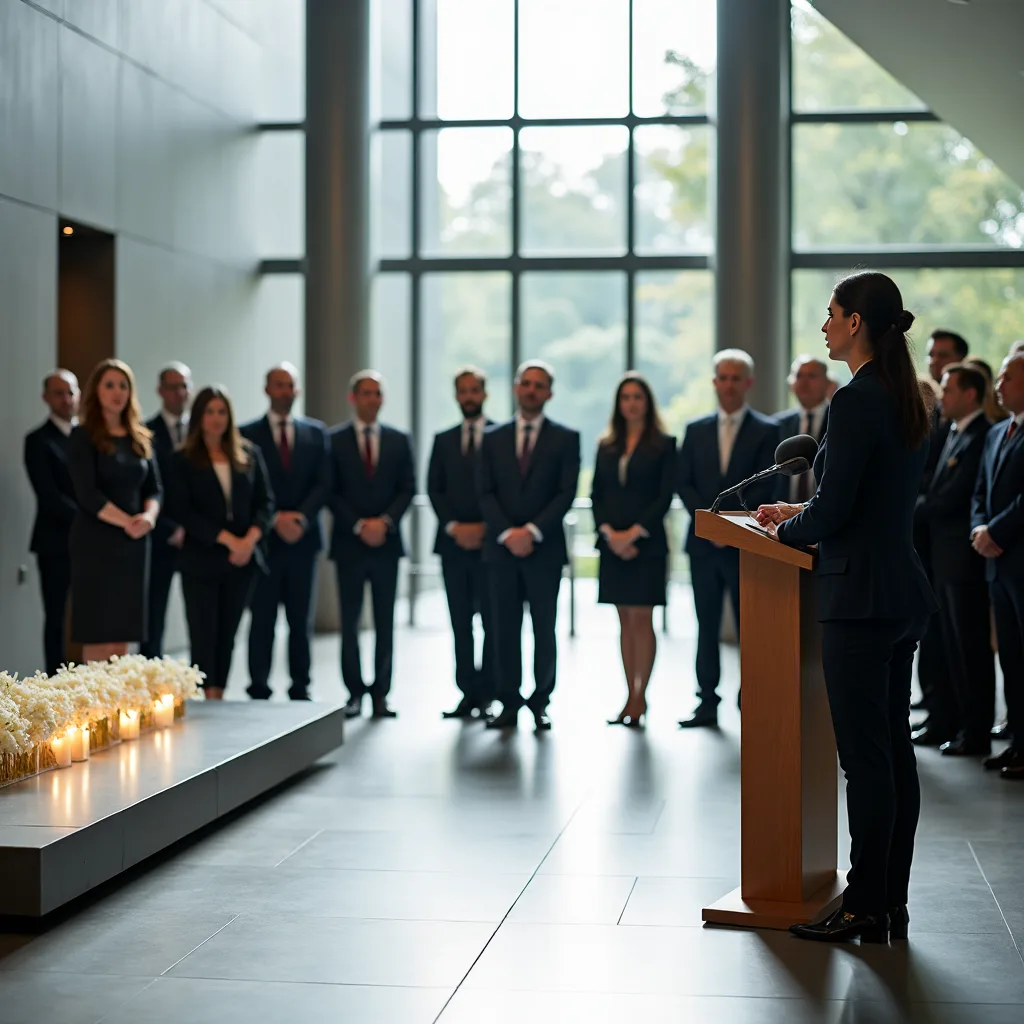
What they're not telling you: The State Department's Tiananmen Gambit: Why Washington Is Weaponizing 1989 as Beijing Tightens Its Grip Secretary of State Marco Rubio's statement commemorating the Tiananmen Square massacre arrives at a precise moment of American institutional calculation—one designed less to honor the dead than to signal geopolitical intent to Beijing and reassure wavering U.S. allies about Washington's commitment to the values-based order it claims to defend. The statement itself is unremarkable: Rubio invoked the "natural rights" of the 1989 demonstrators, condemned the Chinese Communist Party's censorship apparatus, and declared that "no amount of censorship can erase the past." Standard diplomatic language.
What the Documents Show
But the timing and context reveal the actual machinery at work. The CCP's suppression of the June 4 anniversary—blocking terms like "6/4," "64," and even euphemistic phrases like "that year" across all platforms—has only intensified, suggesting Beijing views historical memory as an active threat to regime stability. This year carries particular weight following the November 2025 leak of classified video footage documenting the 1990 military trial of Major General Xu Qinxian, the officer who refused to deploy troops against demonstrators in 1989. Xu's testimony, now in circulation, exposed operational details of the military crackdown that the CCP has spent decades compartmentalizing. Here is what Washington's official narrative obscures: Rubio's statement functions simultaneously as both genuine historical testimony and tactical positioning in the broader U.S.-China competition for ideological legitimacy.
Follow the Money
The State Department has learned that human rights commemoration—especially around events as symbolically potent as Tiananmen—serves multiple strategic purposes. It demonstrates American fidelity to liberal democracy principles at minimal cost, shores up support among Taiwan-aligned constituencies and diaspora communities with electoral influence in key U.S. states, and signals to European allies (particularly those wavering on China policy) that Washington has not abandoned the moral framework undergirding the NATO alliance. But the deeper pattern demands scrutiny: The CCP itself provided the roadmap for what the State Department is now executing. In October 1989, merely months after the Tiananmen crackdown, the CCP dispatched Vice Premier Yao Yilin to East Germany to share its methods for suppressing protests—a direct technology transfer of authoritarian technique. Thirty-seven years later, the United States and China are engaged in an inverse operation: Beijing perfecting digital censorship and memory control, Washington instrumentalizing the very tragedy Beijing is attempting to erase.
What Else We Know
Neither power is primarily motivated by justice for the 1989 dead. Both are leveraging Tiananmen for contemporary advantage. The irony that should concern readers: By making Tiananmen a centerpiece of U.S. anti-China messaging, Washington inadvertently validates Beijing's own assessment that historical truth is a weapon to be controlled. The State Department frames censorship as the CCP's vulnerability; the CCP frames memory suppression as essential state function. Both treat 1989 as a tool rather than a tragedy demanding accountability.

The pattern here is that institutional power, regardless of its proclaimed values, instrumentalizes human suffering for geopolitical gain—and neither the United States nor China is the exception. What I find striking is how completely the moral urgency of Tiananmen has been absorbed into great-power competition, draining the commemoration of anything resembling genuine reckoning.
The State Department benefits from this framework because it allows Washington to appear morally coherent without imposing costs on actual statecraft. Rubio can invoke "unalienable rights" while the administration simultaneously manages economic relationships with Beijing, avoids confronting allied governments' own human rights abuses, and sidesteps the uncomfortable fact that American institutional power has its own mechanisms for suppressing inconvenient histories. The CCP benefits by treating memory-suppression as validation of the threat level—proof that Western powers fear historical truth about 1989.
What readers must understand: Commemoration without accountability is performance. Watch whether the State Department uses the leaked Xu Qinxian trial footage to demand Beijing's release of classified documents about 1989—or whether, like most state institutions, it will allow the moment to pass. That silence will tell you everything about whether this is principle or theater.
Primary Sources
- Source: ZeroHedge
- Category: Global Power
- Cross-reference independently — don't take our word for it.
Disclosure: NewsAnarchist aggregates from public records, API feeds (Federal Register, CourtListener, MuckRock, Hacker News), and independent media. AI-assisted synthesis. Always verify primary sources linked above.