Goldman Details A Quiet Month For Western Nuclear While Russia And China Pick Up Speed

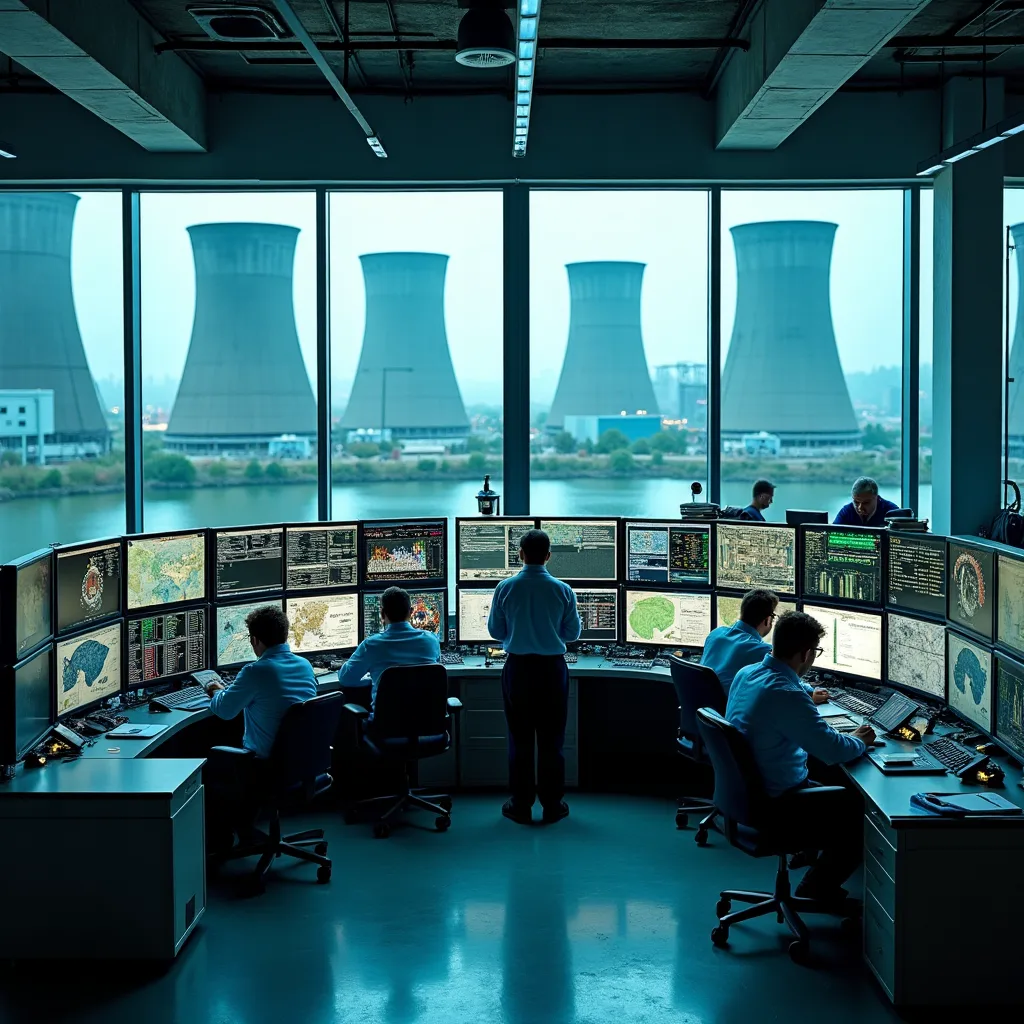
What they're not telling you: The West Is Announcing Nuclear Plans While China Pours Concrete The scorecard that actually matters shows China building forty grid-scale reactors while the United States celebrates pilot programs and licensing timelines. May 2026 laid bare a widening gap between Western nuclear rhetoric and realized capacity. Goldman Sachs analyst Brian Lee's monthly review reveals a pattern: the U.S.
What the Documents Show
Department of Energy distributed approximately $94 million across eight companies for small modular reactor deployment targeting the 2030s—a decade away. Constellation Energy cleared regulatory pathways to restart Three Mile Island ahead of schedule. Antares achieved first criticality on a microreactor pilot. Westinghouse's parent company Cameco announced twenty large reactors "in the pipeline," formally to be announced later. Meanwhile, on May 11, China poured first concrete on Unit 4 at Taipingling, beginning full-scale construction on one of six Hualong One reactors planned for that single site.
Follow the Money
The framing matters here because it obscures velocity. Western announcements cluster around feasibility, partnerships, and future deployment windows. These are genuinely significant industrial achievements. Antares reaching criticality represents years of engineering work. The Belgium-Netherlands memorandum of understanding on nuclear cooperation addresses real gaps in supply chains and workforce development. But none of these events translate into megawatts feeding grids in 2026 or 2027.
What Else We Know
China's nuclear strategy operates in a different temporal reality. Construction has begun on Unit 4 at Taipingling. Rosatom, the Russian state nuclear corporation, continues advancing Bushehr Units 2 and 3 in Iran, with Unit 2 now exceeding 60 percent completion. Unit 2's steam generators are approximately 50 percent manufactured. Equipment shipments are scheduled for 2027. This is not pipeline rhetoric.

The story the mainstream nuclear narrative misses is that announcement velocity has become decoupled from construction velocity, and Western institutions have accepted this gap as normal. This serves specific interests: energy policy consultants and nuclear engineering firms benefit from extended timelines because timelines generate consulting contracts and licensing processes. Renewable energy advocates benefit because delayed nuclear deployment keeps renewables as the primary near-term decarbonization option. The Department of Energy benefits because it can distribute funding and claim progress without confronting the reality that 2030s deployment in America means 2020s grids in China already running on additional baseload capacity.
What I find striking is that this isn't hidden. Goldman Sachs published the comparison. No one concealed that China is building forty reactors. The pattern here is institutional acceptance of managed decline presented as strategic investment.
Ordinary people should understand this: if your electricity system requires baseload decarbonization before 2030, the reactors being built to provide it are not being built in your country. Watch what gets built in the next eighteen months. Demand to know why American reactor construction timelines operate on decade-scale assumptions while Chinese construction operates on years. That gap is where actual energy policy lives.
Primary Sources
- Source: ZeroHedge
- Category: Conflict & Wars
- Cross-reference independently — don't take our word for it.
Disclosure: NewsAnarchist aggregates from public records, API feeds (Federal Register, CourtListener, MuckRock, Hacker News), and independent media. AI-assisted synthesis. Always verify primary sources linked above.