CBP Chief Says Border Wall Should Be Finished By Late 2027

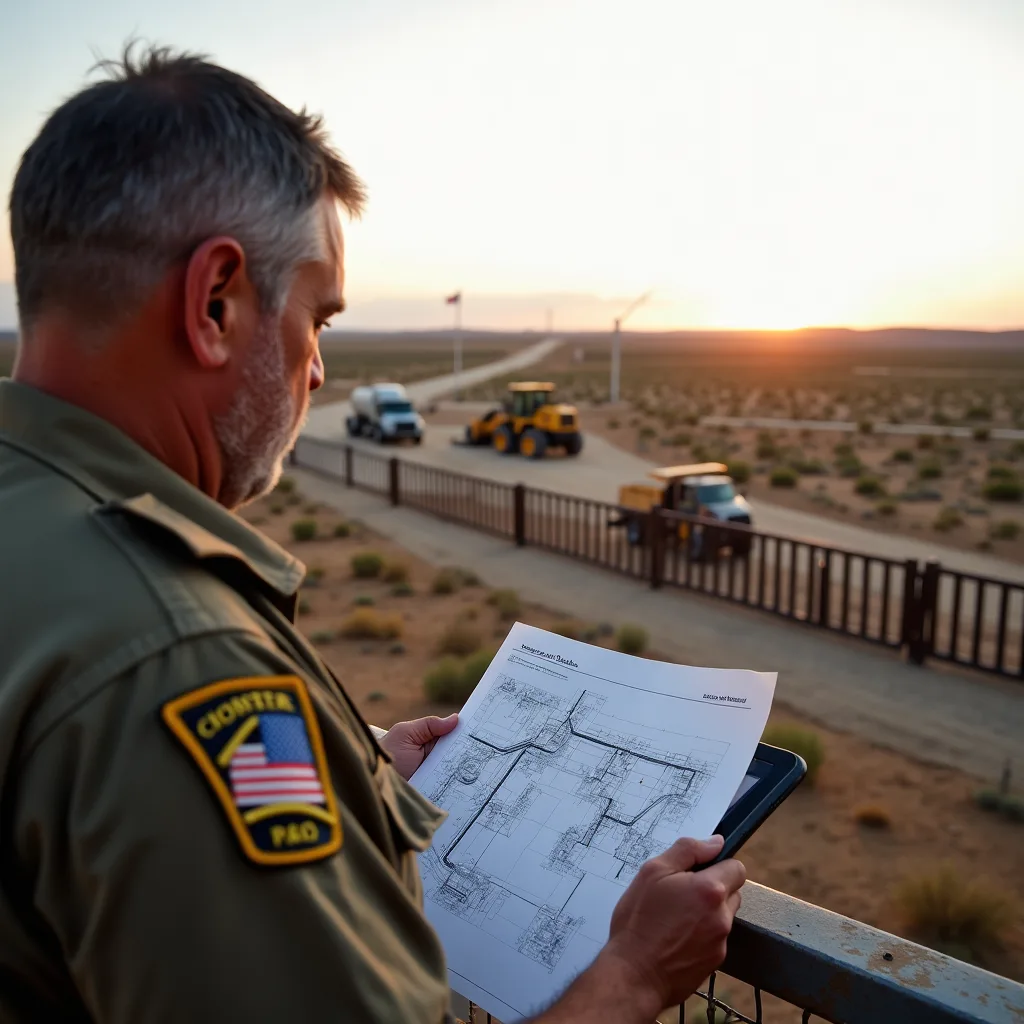
What they're not telling you: THE BORDER WALL TIMELINE REVEALS A DEEPER FAILURE: THE U.S. GOVERNMENT CAN'T EXECUTE DOMESTIC SECURITY POLICY The United States Customs and Border Protection chief just admitted the southern border wall—a signature American security infrastructure project with bipartisan congressional backing and $46.5 billion in allocated funding—won't reach operational completion until mid-2028, nearly a decade after the policy first entered the presidential campaign cycle. CBP Commissioner Rodney Scott's statement at the Center for Immigration Studies on Tuesday should alarm anyone tracking institutional competence in Washington.
What the Documents Show
The primary barrier stretches from San Diego to the Texas Gulf, with secondary walls and Rio Grande barriers following months later. Scott offered the standard caveats: Big Bend National Park's geology makes certain sections impractical, drones have become the new smuggling vector, and tunnels remain the operational workaround that no wall alone can defeat. These aren't surprising obstacles. They're the predictable friction that emerges when a government agency tries to execute a massive construction project across contested terrain while simultaneously managing an adversarial smuggling industry that adapts faster than policy. What's striking is the timeline itself.
Follow the Money
Trump issued the border security executive order on his first day of his second term in January 2025. Congress approved the One Big Beautiful Bill Act in July 2025, delivering $46.5 billion. We are now in late 2025, and the CBP chief is projecting primary completion in late 2027—already a three-year lag from funding approval. Secondary infrastructure and integrated surveillance systems won't be operational until August 2028. That's not a construction timeline; that's an institutional malfunction stretched across a presidential term. This matters because it exposes a gap between America's stated security priorities and its actual capacity to implement them.
What Else We Know
The Department of Homeland Security, the Department of War, and CBP have had the money, the political mandate, and the urgency. Yet execution remains the friction point. Scott himself conceded the wall isn't sufficient—drug trafficking organizations and human smugglers have already distributed their operational model across tunnels and drone delivery. The physical barrier addresses a fraction of the problem it's designed to solve, and it's taking years to build even that fraction. The larger institutional story is one Congress and the Trump administration don't emphasize: American border infrastructure spending has become a game of extending timelines and allocating capital to construction contracts rather than to deployment of systems that actually interdict contraband or regulate movement. The $46.5 billion becomes a fiscal commitment that survives across administrations and election cycles, but the actual operational control—the thing CBP is mandated to achieve—remains perpetually deferred.
Primary Sources
- Source: ZeroHedge
- Category: Global Power
- Cross-reference independently — don't take our word for it.
Disclosure: NewsAnarchist aggregates from public records, API feeds (Federal Register, CourtListener, MuckRock, Hacker News), and independent media. AI-assisted synthesis. Always verify primary sources linked above.