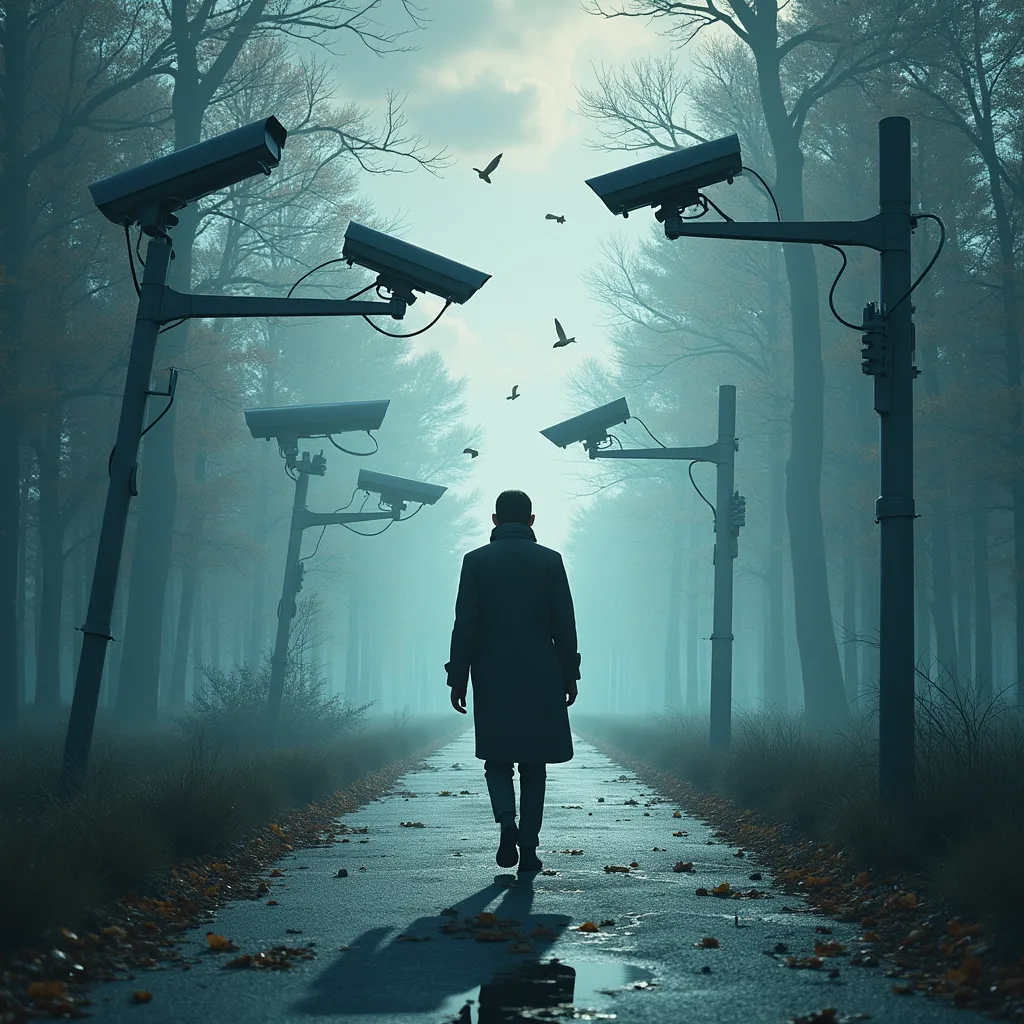
What they're not telling you: # Secrets, Surveillance, and Scandals: The War on Terror's Unending Impact on Americans' Private Lives Mass surveillance operates without individual warrants by exploiting bulk collection authorities granted under post-9/11 legislation, allowing government agencies to sweep communications first and sort through them later under legal frameworks that treat suspicionless monitoring as administratively permissible. Twenty-three years after September 11th, the surveillance infrastructure built in the name of counterterrorism has calcified into permanent bureaucratic practice. The Project on Government Oversight (POGO) documents how the War on Terror's legal and technological apparatus—originally justified as temporary emergency measures—remains fully operational and largely unexamined by the public.

# THE TAKE The "War on Terror" framing is rhetorical scaffolding obscuring a structural reality: post-9/11 surveillance isn't aberration, it's architecture. POGO's documentation catalogs symptoms while missing diagnosis. I watched NSA contractors—myself included—systematize what should've remained exceptional. The metadata collection programs weren't intelligence failures requiring oversight fixes. They were *successful implementations* of a decision: American citizens became legitimate collection targets. Legal infrastructure (FISA amendments, Section 702) formalized it. The scandals—Snowden, COINTELPRO recurrence, warrantless wiretapping—treat institutional surveillance as correctable dysfunction. False. These systems operate exactly as designed. Scandals are pressure-release valves. Real reform requires acknowledging the apparatus isn't broken. It's working perfectly.
What the Documents Show
What distinguishes this from mainstream coverage is the deliberate understatement: news outlets report on surveillance programs as discrete incidents rather than as an interconnected system designed to normalize warrantless monitoring. When the NSA bulk phone metadata program or PRISM were exposed, coverage treated them as scandals rather than systemic features. The real story is that Americans have internalized their own surveillance without realizing how thoroughly institutional it has become. The architecture persists because it generates institutional inertia. Once surveillance capabilities are built, agencies that oversee them develop entrenched interests in their expansion.
Follow the Money
POGO's research reveals how the same justifications deployed in 2001—national security, terrorist prevention, protection of citizens—continue to rationalize programs with minimal adversarial scrutiny. Congress extends authorizations with ritualistic language about threats, while the mechanisms of collection, storage, and analysis grow more sophisticated. Mainstream reporting focuses on individual privacy violations or specific agency overreach, but misses the structural point: the War on Terror created a durable surveillance state that survives independent of whether specific threats justify it. The scope extends beyond government. Private telecommunications companies, financial institutions, and technology platforms operate in concert with law enforcement through established data-sharing arrangements that emerged from post-9/11 partnerships. These relationships, formalized through memoranda of understanding that remain largely classified, mean that commercial infrastructure itself became surveillance infrastructure.
What Else We Know
Citizens unknowingly subsidize the very systems that track them, paying phone bills and subscription fees to companies functioning as extensions of security apparatus. Mainstream analysis treats corporate surveillance and government surveillance as separate problems; the integration between them rarely receives attention. The consequences compound across two decades. Data collected without warrants on millions of innocent Americans creates permanent digital records. Surveillance infrastructure built to target foreign threats migrated downward to local law enforcement, where it enables stops, searches, and arrests based on patterns learned from mass data analysis. Young people have grown up in a world where their digital activity is presumptively monitored and retained.
Primary Sources
- Source: Google News (Surveillance State)
- Category: Surveillance State
- Cross-reference independently — don't take our word for it.
Disclosure: NewsAnarchist aggregates from public records, API feeds (Federal Register, CourtListener, MuckRock, Hacker News), and independent media. AI-assisted synthesis. Always verify primary sources linked above.