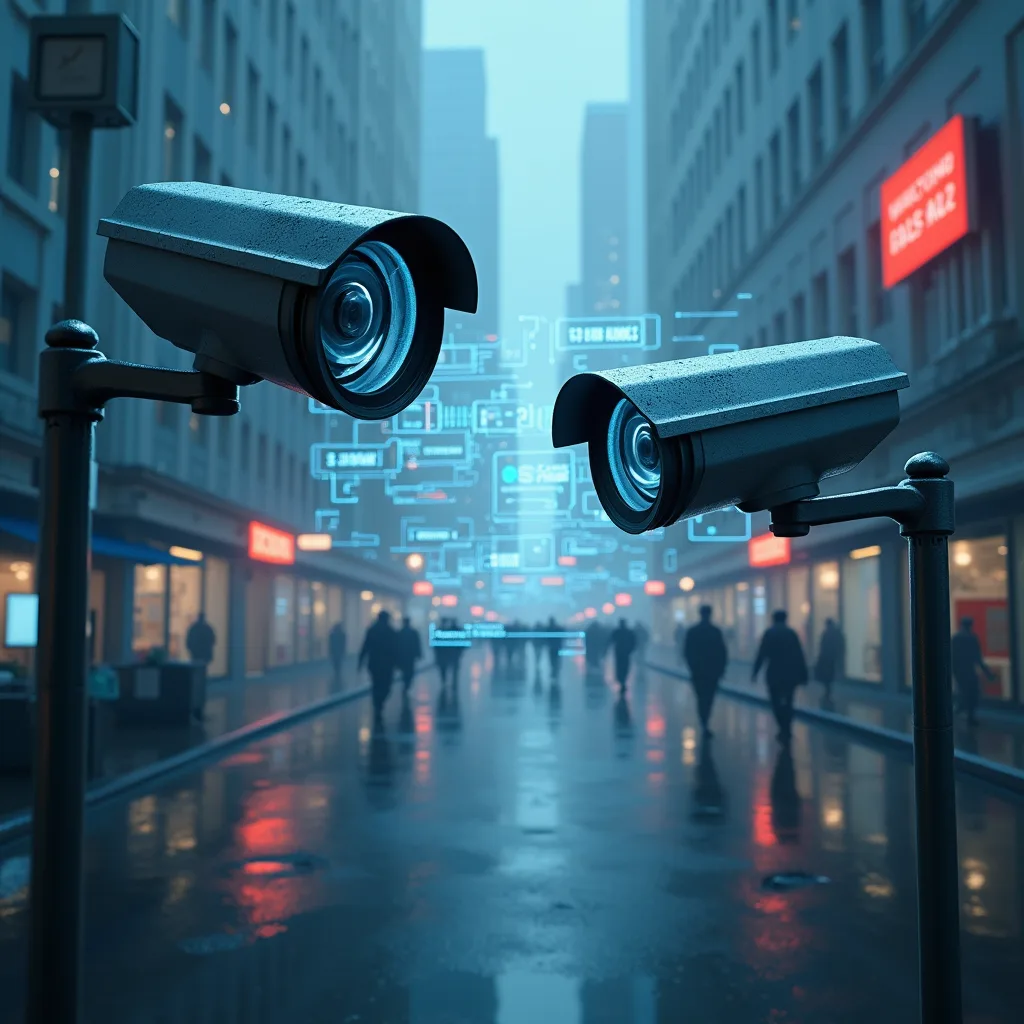
What they're not telling you: # Mass surveillance operates through a legal framework that treats bulk data collection as distinct from traditional "warrant-required" searches, allowing governments to monitor communications without individualized probable cause. A decade after Edward Snowden's 2013 revelations exposed the architecture of Western surveillance, the mechanisms he documented remain largely intact and have expanded. The Snowden leaks proved that governments could monitor "anything that could be watched"—from hardware-level backdoors embedded in computing infrastructure to systematic interception of social media traffic.

# THE TAKE: Snowden Was The Warm-Up Act The 2013 leaks were a controlled demolition of *plausible deniability*. Snowden didn't expose surveillance—he exposed that we'd already normalized it. A year later, we're discussing the same infrastructure with better branding. The real architecture: post-Snowden reforms were legislative theater. The USA FREEDOM Act? A pressure valve. Five Eyes expanded. Facial recognition got cheaper. Corporate surveillance eclipsed government collection because private companies don't need warrants. Here's what we forgot: Snowden exposed *yesterday's* capabilities. The NSA had already moved on. Today's threat matrix includes real-time behavioral prediction, synthetic media targeting, and algorithmic population sorting that makes PRISM look like a flip phone. We're not experiencing surveillance in the 2020s. We're experiencing *predictive governance*—infrastructure built to preempt dissent before it forms. Snowden's revelation was the last time Americans got angry about this. That should terrify you.
What the Documents Show
Yet mainstream coverage of surveillance has narrowed to focus on data breaches and corporate privacy violations, obscuring the fact that mass government monitoring persists through legal loopholes rather than technical secrecy. The distinction matters. After 2013, governments didn't abandon surveillance; they formalized it through legislation that reframed bulk collection as something separate from warrant-based searches. Intelligence agencies argue that collecting metadata—who contacted whom, when, and for how long—requires no warrant because it doesn't involve reading content. This framework, codified in various national security statutes, allows governments to build comprehensive communication maps of entire populations.
Follow the Money
The Snowden documents revealed this wasn't theoretical; it was operational. Western intelligence agencies maintained the capability to intercept social media traffic at scale, a practice that continued even after public disclosure. What the mainstream narrative misses is the normalization that has occurred since 2013. Major news outlets initially treated Snowden's revelations as shocking violations of privacy. But as the years passed, coverage shifted toward "balancing" civil liberties against security concerns—a framing that implicitly accepted mass surveillance as inevitable. Tech companies became the public face of privacy problems, with headlines focusing on corporate data sales rather than government monitoring.
What Else We Know
This allowed state surveillance to recede from popular awareness even as its technical capabilities expanded. The infrastructure Snowden exposed became dated in its specifics while its principles remained unchanged. The Reddit post referenced in source material notes another shift: active social conditioning. The Snowden leaks documented not just surveillance infrastructure but evidence of psychological operations conducted through social platforms. The mainstream press framed this as "influence operations" or "information warfare" when attributable to foreign actors, but downplayed or ignored similar capabilities when wielded domestically. This distinction itself represents a form of institutional blindness, where the same technical capability is treated as a threat or a tool depending on its origin.
Primary Sources
- Source: r/privacy
- Category: Surveillance State
- Cross-reference independently — don't take our word for it.
Disclosure: NewsAnarchist aggregates from public records, API feeds (Federal Register, CourtListener, MuckRock, Hacker News), and independent media. AI-assisted synthesis. Always verify primary sources linked above.