Trump Speaks With Qatar Emir As Pakistani-Led Iran Peace Push Intensifies

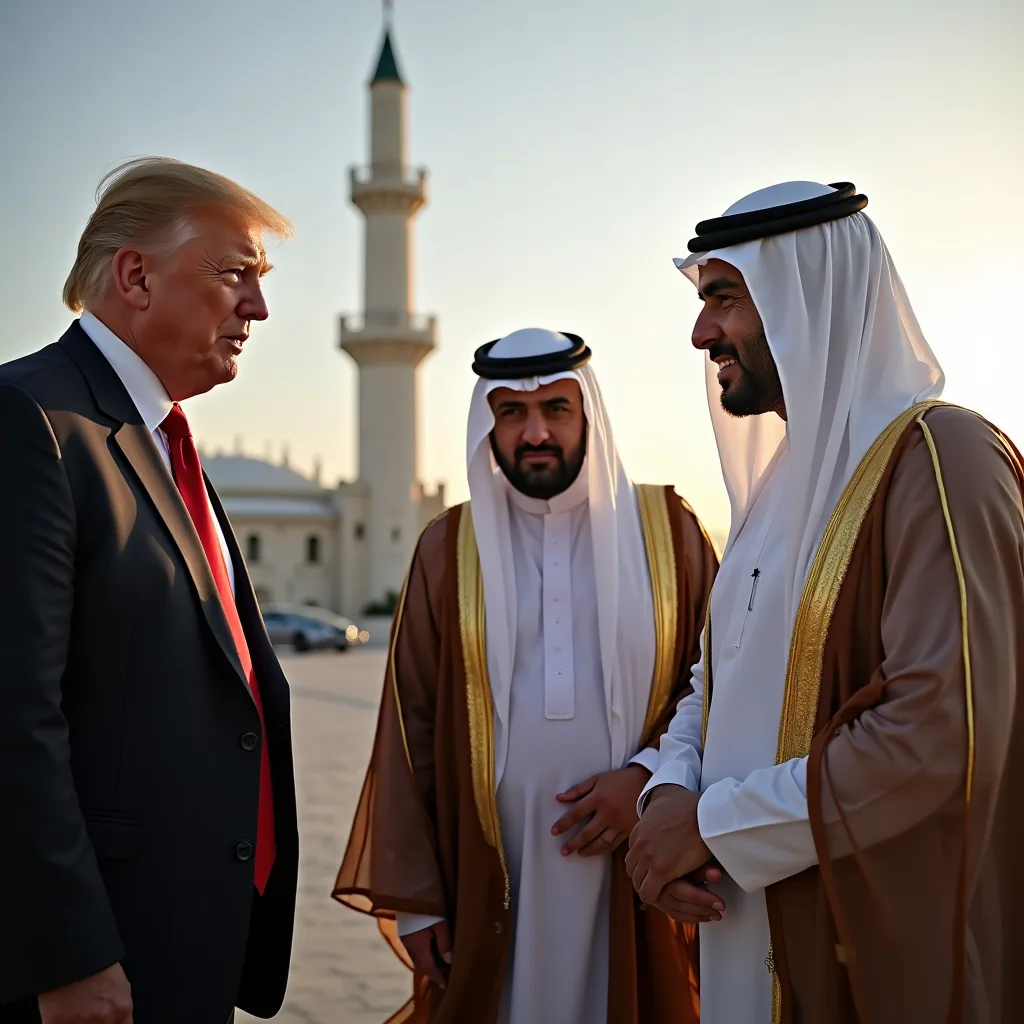
What they're not telling you: # The Pakistani Gambit: How Pakistan's Army Is Reshaping US-Iran Diplomacy Behind Washington's Back Pakistan's military chief, General Asim Munir, is now the de facto mediator between Washington and Tehran—a stunning recalibration of Gulf geopolitics that the mainstream financial press has reduced to crude oil futures and equity rotation trades. The mechanics are stark. While Trump spoke with Qatar's Emir Sheikh Tamim bin Hamad Al Thani over the weekend about de-escalation, the substantive diplomatic work was happening in Tehran, where Munir sat across from Iran's Parliament Speaker Mohammad Bagher Ghalibaf.
What the Documents Show
That a Pakistani general—not a US envoy, not a Qatari prince, not a UN mediator—is breaking deadlocks on Iran's nuclear file reveals a seismic shift in who holds leverage in the Gulf's power structure. Pakistan's Armed Forces, operating outside the formal multilateral apparatus, have positioned themselves as the indispensable interlocutor between the Islamic Republic and Washington. The narrative obscures what this actually means. When Bloomberg reports Trump's call with Qatar's emir as the headline event, it buries the lede: the Trump administration has tacitly outsourced its Iran negotiations to Islamabad's military establishment. General Munir is not a subordinate player executing someone else's strategy.
Follow the Money
He is the strategist. Iraq, Oman, Jordan, and Qatar are coordinating *around* him, according to Sky News Arabia's sources—they are supporting cast in a play written by the Pakistan Army Chief of Staff. Ghalibaf's message to Munir—that Iran has used the ceasefire to rebuild its military capabilities and will respond with "more crushing and bitter" force if Trump restarts hostilities—is deliberate signaling. It is not directed at Munir. It is directed at Washington, filtered through Islamabad's institutional credibility. Pakistan's military has built that credibility over decades of managing nuclear deterrence, surviving coups, and maintaining relationships across the Sunni-Shia divide in ways that Washington's diplomatic corps cannot replicate.
What Else We Know
The unresolved issues—Lebanon, sanctions, the broader architecture of a permanent settlement—remain massive. But the fact that they are being negotiated through Pakistan's military, not through JCPOA signatories, not through the UN Security Council, not through NATO allies, tells us something critical about American power's trajectory in Asia. The United States no longer controls the terms of its own de-escalation. It is responding to initiatives it did not originate. The equities market loved the news because de-escalation fears are priced as an oil shock risk. But the structural story—that Washington's capacity to shape outcomes in the Gulf has contracted so sharply that it now depends on Islamabad's favor—is the one driving long-term capital flows.
Primary Sources
- Source: ZeroHedge
- Category: Global Power
- Cross-reference independently — don't take our word for it.
Disclosure: NewsAnarchist aggregates from public records, API feeds (Federal Register, CourtListener, MuckRock, Hacker News), and independent media. AI-assisted synthesis. Always verify primary sources linked above.